The Keys to Navigating Change: Marketing, Listening, and Creating Positive Stories
BY Paul Kersey
|
October 13, 2026

Change is a regular part of business, and sometimes adapting to new circumstances requires a company to overhaul its entire business model. Executives may spend months rethinking operations, products, and brand identity. But once the plan is finalized and presented to managers and workers, they may be tempted to consider the job done.
Neil Bedwell, president of LOCAL, says that this is a mistake. Unveiling the plan is really only the beginning, he said during a thought leadership spotlight at From Day One’s Chicago HR conference. Putting the plan into action is where the real work begins. Turning a business strategy into reality can take a year or more, and success depends on getting employees on board.
Marketing Change to Your Own Employees
LOCAL specializes in helping companies communicate major business changes to their workforce, explaining the reasoning behind new strategies and getting workers on board with putting them into practice.
It can be difficult. “Change is about people," Bedwell said. “We are not rational, logical individuals. We do not respond to information. We are emotional, passionate, creative creatures.”
Managers may assume that employees will follow instructions simply because they’re paid to do so. But compliance alone isn’t enough. To get the best results, draw on workers’ knowledge and experience, and make changes last, executives need to sell the new approach internally, much as they would market a new product or service to customers, says Bedwell.
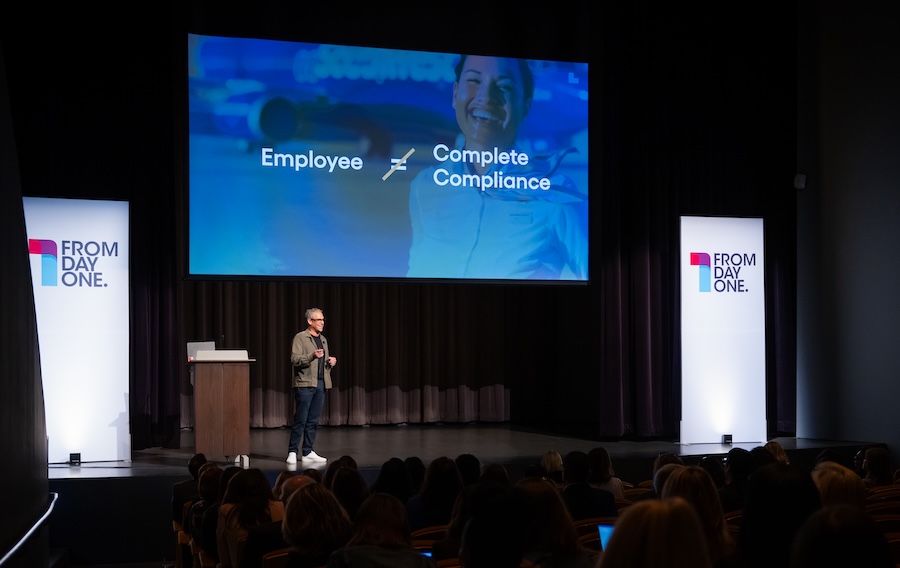
As is often the case with marketing, the key is effective storytelling and compelling stories. “Companies tend to think about it from a company perspective, which, if you’re an employee, that’s a change happening to me,” Bedwell said. “What we need to do is think about change happening with me.”
A good story can frame change as a positive rather than a negative. Bedwell cited Alcoa Corporation, an aluminum manufacturer that brought in a new management team in the late 1980s. At the time, the company had a reputation among workers for cutting corners to improve efficiency at the expense of safety. The new leadership made worker safety a priority.
It didn't happen overnight, but Alcoa's employees saw the shift. The company valued them and was working to protect them. Accidents fell by 95%, productivity improved along with employee morale, and income increased fivefold over the next twelve or so years, says Bedwell. This is the kind of story that HR professionals should want to tell, where change is not imposed on workers but implemented with workers, empowering them to do their best and enriching them.
With AI, Stories Matter Even More
Nearly every workplace will be adopting AI tools in the next few years, if it hasn’t already. As the technology becomes more sophisticated, its usefulness will continue to grow. The AI-powered workplace will be one of steady change, as computers develop new capabilities and refine existing ones. But for workers, especially those in creative and knowledge-intensive roles, AI raises concerns. Will AI take over my job? How long before it does? And what happens to me then?
From his vantage point, Bedwell says employees are “scared” and “apathetic,” concluding bluntly that workers “are not embracing this.” Concerns about how AI could affect workers’ livelihoods and well-being are widespread and likely to persist for years.
Introducing AI to employees takes time. Employers must address uncertainty through education, establish shared values, and explain the business case. Bedwell envisions as many as eight steps to help workers move from apprehension to confidence in their future roles. But however many steps are involved, the key will be to adopt the marketing mindset of focusing on the needs of the audience, customers or, in this case, employees. “Marketing is orienting everything you do, everything you think, around your audience,” Bedwell said. “If you want to create that intentional, emotive, powerful story, you have to design it around them, not around the company.”
Listening Leads to Caring
People can only genuinely care about so much—Bedwell equates this to a parking lot with around 20 spaces. If you want to reserve a spot, you need to connect to the employees’ desires. “I want to make an impact. I’d like to grow my career. I want to be attached to purpose. If you can attach your initiative to that thing, then you get a spot, and that’s how caring works,” he said.
At the heart of this approach is listening to workers and understanding their lives and ambitions. When HR leaders understand their workforce, they can develop policies that support workers and frame change as something that benefits both employees and the business. By communicating change from the workers’ perspective, managers, especially HR professionals, can gain the buy-in needed to make business changes succeed.
Editor’s note: From Day One thanks our partner, LOCAL, for sponsoring this thought leadership spotlight.
Paul Kersey is a former attorney and freelance writer who has covered events for Bloomberg News and other outlets. Paul is based in Chicago, IL.
(Photos by Josh Larson for From Day One)