Why Better Data Can Help Parents Make Tough Decisions
BY Emily Nonko
|
August 25, 2021

This fall, schools will reopen their doors in an uncertain new stage of the pandemic, as the Delta variant poses new questions and potential risks. For parents, navigating yet another unknown can be daunting. That’s why Emily Oster, an economics professor at Brown University and writer of data-driven books on pregnancy and parenting, advocates bringing some business thinking into your household.
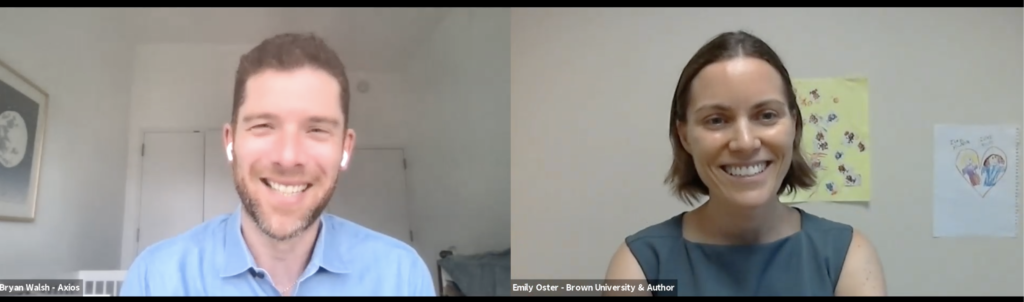
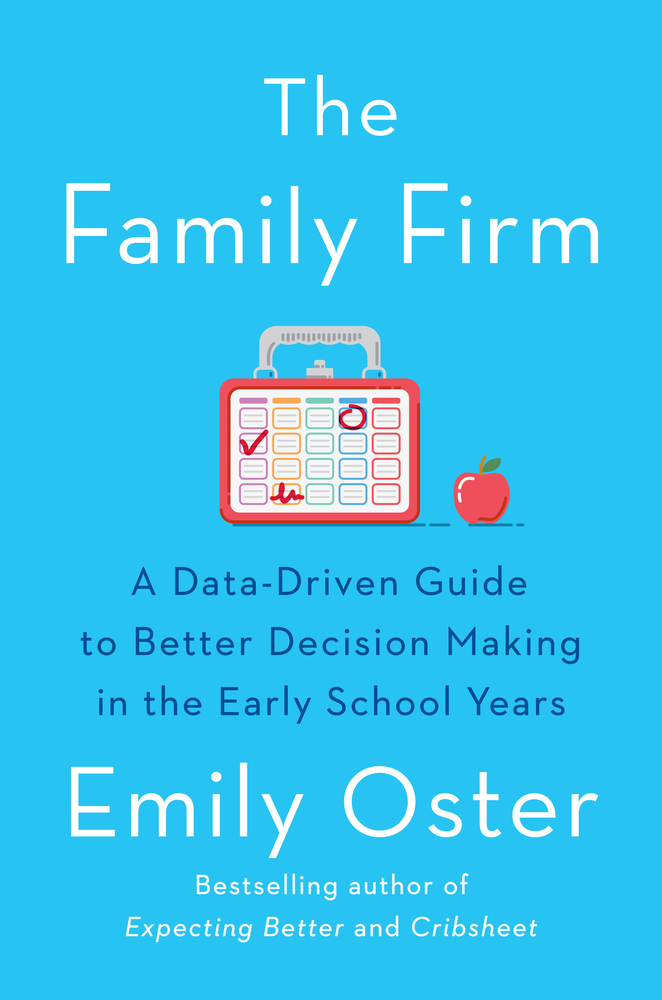
“It’s not about your baby needing a briefcase, or using spreadsheets to optimize or make your kid do more stuff,” she said. “The piece I really want to pull on is the deliberate, intentional decision-making, which a lot of times, in our families, leads us to do less instead of doing more,” said Oster, who this month published The Family Firm: A Data-driven Guide to Better Decision Making in the Early School Years, the third installment in her ParentData series. Oster joined Bryan Walsh, the Future Correspondent for Axios, for a one-on-one conversation at From Day One’s August virtual conference, “Learning From a Crisis About What Working Parents Need.”
Oster has grown in notoriety over the course of the pandemic, especially following an opinion piece in July 2020 suggesting that schools and child care centers might be able to reopen safely. Some parents religiously follow her work, while others–including some teachers, epidemiologists and labor activists–have pointed out that she is not an infectious-disease expert or public-education professional. As Walsh put it, “you were willing to follow the data even if it meant going against the generally-accepted beliefs about certain practices,” he said, mentioning her earlier book that challenged some conventional pregnancy rules. Replied Oster: “All you can do, in that situation, is try to be honest, try and be right, and try to be helpful to push forward conversation and understanding. This year has been more complicated for those things than almost anything else I’ve done.”
It’s clear the pandemic–and its devastating effect on working moms–has deeply informed Oster’s data-driven work and will continue to do so. During the discussion, she used the return-to-school dilemma as an example of the importance in families to carefully weigh all their choices. The Family Firm provides a framework to do so: the four Fs. “The first F is to frame the question, to have two or three concrete options,” she explained. Instead of just weighing whether to send your child to school or not, you want to flesh out the options you’ll have if you decide not to send them.
That’s followed by “fact find–an overarching step in which you gather all the information you need in one place,” Oster said. For the Covid situation, you might consider the risk level of Delta, the types of safety protocols local schools are taking, or the characteristics of alternative learning choices.
The third step is making the final decision–as opposed to dragging the process out indefinitely. The fourth is following up. “In almost all of these choices, we could have the opportunity to rethink them,” Oster said. “While we’re making the decision, we want to have a plan to re-make it or re-visit it in some way.”
While the uncertain future of the pandemic makes it difficult to set a follow-up for Covid-related plans, Oster pointed out that most decisions have an obvious follow-up time. “You choose a school for your kid, the obvious time to follow up is in the next school year,” she said. Other decisions, like buying your child a phone, should include a built-in “trial period” that establishes a follow-up ahead of time.
An unexpected lesson of the pandemic, Oster said, was that families staying at home together have an opportunity to make new, intentional decisions about the future, rather than simply returning to the way things used to be. “It is a moment to say, we don’t need to re-introduce everything we were doing in 2019,” she said. “And if you really liked having a weekend day that was free to go to the beach, is there a reason you couldn’t retain that?”
The pandemic also forced employers to acknowledge the flexibility needs of working parents. Oster referred to her pre-pandemic Atlantic article, “End the Plague of Secret Parenting,” which urged parents to speak openly about child care obligations. The pandemic brought those needs to light and workplaces should continue to acknowledge them, she said. “As people think about the life they want, they’ll think about the times they want to spend with their families. Is there a way firms can provide that kind of flexibility in order to make it possible to have a job and that time?” she asked.
Oster spent a significant amount of effort last year contributing to the Covid-19 School Response Dashboard, given the absence of federal data on how schools addressed Covid-19 and the kind of impact those decisions had. This year, she is working on a larger data project focused on the opening modes of schools. It’s expected to become publicly available this fall.
“The reason for that is research and policy, and thinking about how the implications of these schooling disruptions over the last year are going to be vast,” she said. “We’re starting to know some short-term things–we’re seeing some pretty significant evidence of kids facing challenges.”
The long-term impact, however, is less certain. “I think it’s up to us,” Oster said. “If somebody hasn’t learned to read, we can teach them how to read. There’s all these ways we can try to fix this problem.”
Emily Nonko is a Brooklyn, NY-based reporter who writes about real estate, architecture, urbanism and design. Her work has appeared in the Wall Street Journal, New York magazine, Curbed and other publications.


