How a Culture of Learning Equips the Workforce for What’s Next
BY Katie Chambers
|
March 16, 2026

When the pandemic hit, the hospitality industry lost many workers. At Soho House, the impact was dramatic, with roughly 80% of the workforce disappearing either temporarily or permanently. Rebuilding meant more than simply re-hiring. It offered an opportunity to rethink how people learn on the job.
During an executive panel discussion at From Day One’s February virtual conference, Lauren Goodman, regional head of people and development at Soho House, shared how the company redesigned its learning and development approach from the ground up, creating role-specific onboarding guides and self-paced training that allow employees to build skills while working rather than racing through rigid certification timelines.
The results were striking. Turnover dropped about 25% year over year from 2022 to 2023, and the company now averages around 32% turnover, below the hospitality industry standard, says Goodman. The shift showed how personalized, flexible learning programs can play a direct role in retention.
What Employees Want to Learn Today
Because the modern workplace is changing rapidly, employees are looking for programs to help them keep up. “One of the big things that is top of mind for so many organizations now is agility and learning and how to be more adaptable and resilient,” said Priscila Bala, vice chair at LifeLabs Learning. “The half-life of many of the skills that we have is about 18 months. Cycles are compressing so much.” So, faster and shorter are better.
“We don’t have people asking for those large, generic programs anymore. They want short, practical learning tied to the job, real-time feedback from their boss,” said Marcus Cazier, head of L&D, Americas, bioMérieux. This is also due to shrinking patience and attention spans, Goodman says. Plus, they are looking to the future: “They’re also looking for us not just to train them on their job, but that growth mindset as well.”
Of course, AI is one of the factors driving rapid change, so employees are hoping to stay abreast of the latest technology. “At Autodesk, it’s primarily around upskilling and AI, also the impact that AI is having on both teams, individuals, and the organization, in addition to specific workflows and how workflows are changing as a result of AI integration and building an AI native mindset,” said Michel Riyad Nabti, senior director of learning & development at Autodesk.
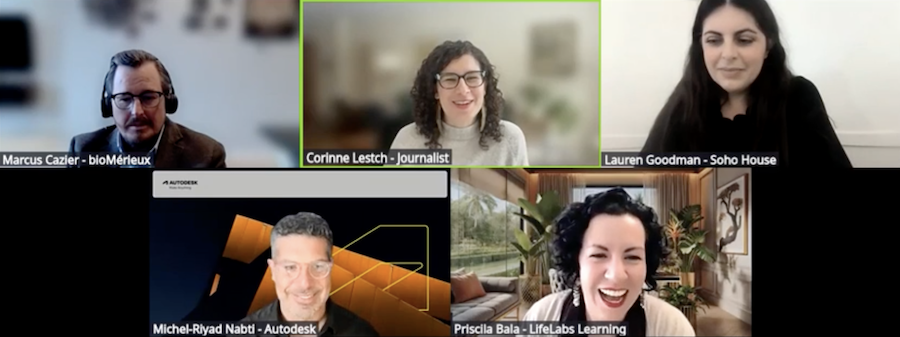
Employees are also preferring less structured programs, opting for self-directed opportunities instead. “We’ve also noticed that when we do optional micro trainings, we get a more positive response and a larger response than when we have a formalized, mandatory two-hour training,” Goodman said. “To me, it’s helpful to know we might still do the full two hours, but we’re going to do it in a ‘micro’ setting, so that way it’s more appealing to our team, and hopefully they retain it better, too.”
But Bala emphasizes that L&D shouldn’t feel too optional or separate from other business initiatives—otherwise, it will fall by the wayside in favor of what feels like more pressing work priorities. “The folks that are really successful are the ones that actually make it as part of an execution strategy, instead of treating learning as if it’s a separate thing that happens outside of business,” she said. “When people learn individually, you don’t get their colleagues to recognize what’s happening. They don’t have a shared language, it becomes so much harder to reinforce what are really the norms that are going to help us be more efficient and effective.”
Building an Effective L&D Program
AI can be an important partner in providing up-to-date, personalized learning plans to employees. “We’re making a transformation from L&D being a content provider, Content Manager, to being a strategic partner across the enterprise, and part of that transformation is building a learning ecosystem,” Nabti said. Autodesk has “internally designed learning programs in addition to external vendor provider programs that can provide that kind of personalization and an impact to each individual when meeting them, where their needs are.”
Launching a one-size-fits-all program can be tricky among corporations with a variety of roles, from front-of-house hourly workers to designers, executives, and beyond. “How do you ensure that L&D is consistent among all those employees?” asked session moderator Corinne Lestch, journalist and founder, the Off-Site Writing Workshop.
Cazier shares that his organization, which does business all over the world, offers peer-to-peer review and training sessions where participants can practice customer conversations with each other and give real-time feedback, which becomes especially important when educating each other on cultural and linguistic nuances. “It’s allowing us to immediately embed what they’re learning into conversations. And then we are also connecting these behaviors to their bonuses and to their merit. We have begun holding leaders accountable for how they accomplish things and to ensure that they’re doing it in the way that the organization wants things done,” Cazier said. “We have aggressive growth goals, but we also have a high ethical standard, and we have a very deep, humanistic approach that we’re proud of, and we don’t want to lose as we try to evolve the organization.”
Soho House, which employs everyone from dishwashers to graphic designers, feels this acutely. “Making sure that everyone feels really valued throughout that training process is critical,” Goodman said. “Getting buy-in from several key stakeholders [is also crucial], because it’s not just one aspect of the business, but it’s really what makes the whole business successful.” Corporate brand, values, and identities should be embedded in all L&D programs, including how those values “trickle down” across the team. Then, you can demonstrate how different skills contribute to and uphold those values during day-to-day work.
Skills assessments should ideally be paired with L&D programs to establish a baseline of current skills and assess whether training has been effective. “What are the skills and competencies that we are mapping so that the learning can be intentional? People want their capability-building to be purposeful,” Bala said.
Panelists agree that providing L&D opportunities is also important to building a culture of psychological safety and freedom, allowing workers to feel comfortable experimenting, growing, and forging their own path. “That’s so crucial in this inflection point that we’re currently in,” Nabti said. “Having a culture of experimentation and agility that’s aligned to the company’s culture is crucial for our success, and also detaching us from this expectation that every initiative has to be successful. That culture of experimentation frees us up to explore areas where we may have really big performance goals.”
Asking employees what they want to learn is key to building a healthy, sustainable, and attractive L&D program. Soho House includes a question about learning goals in its performance reviews at all levels. “What is it that they want to learn so that we can help support their learning objectives as a human and as an individual? Having that as a requirement has helped to create that culture of learning and development,” Goodman said. “None of us knows it all. Let’s ask you, on a formalized basis, what [do] you want to learn at the end of the year? Did we commit to that as the employer? Did we help support you there? If not, how do we do better next year?”
Katie Chambers is a freelance writer and award-winning communications executive with a lifelong commitment to supporting artists and advocating for inclusion. Her work has been seen in HuffPost, Top Think, and several printed essay collections, and she has appeared on Cheddar News, iWomanTV, On New Jersey, and CBS New York.
(Photo by kasto80/iStock)