Elevating the Frontline Experience: Engagement, Growth, and Retention
BY Katie Chambers
|
June 02, 2026

Creatively engaging frontline workers can strengthen teams, improve retention, and dramatically speed up employee readiness. One recent solution: by pairing new hires with trained peer mentors during their first 90 days, Intermountain Health created a support system that helped employees feel welcomed, build confidence faster, and develop stronger connections across their teams.
“In that first year, we were able to reduce time to independent performance by 41% across six departments, so that equated to $1.9 million in productive time that we were able to return to the business,” said Bette Kidane, senior director of learning & development at Intermountain Health, during a panel discussion at From Day One’s May virtual conference.
Creating a Supportive Environment for Frontline Workers
“Frontline workers power businesses around the world, day in and day out. Without them, we probably wouldn't be able to advance as an organization worldwide,” said Angie Parsons, director of product marketing at LumApps. But they are often at a disadvantage. “Those frontline workers typically don’t have the same tools and technology that the rest of the workforce has.” Equity and inclusion initiatives are key to helping them to feel just as connected as their in-office peers. Access to information and communications tools can impact “safety, productivity, promotion, [and] career growth.”
Michelle Anderson, VP of global learning & development at AmTrust Financial Services, says the best way to address those needs is “listening often and responding visibly,” via pulse surveys with public results. Embedding growth opportunities within the flow of work is another way to encourage frontline development, she says, relying on software tools like Viva Learning and Microsoft Teams to push content during work hours.
Keeping managers well-trained and consistent can help frontline workers feel secure and supported. “The immediate manager is the world to people,” said Yulia Denisova, VP of talent and development at Fanatics. “That’s the reason why people stay in the organization, and that’s the reason why people decide to leave the organization.”
Making those pathways to information and support clear is crucial, both to the workers and to your overall business success. “Many times, frontline workers interact directly with customers, so when they have questions or are unsure about something, knowing where to get those answers quickly and confidently is critical, and that reflects both back to the worker as well as to the customer,” Kidane said.
Tackling the Challenges of the Frontline Experience
Frontline workers can often be harder to acquire and retain because of the unique challenges that come with their positions. One of the biggest roadblocks to retention can be a feeling of disconnection. “It feels like decisions are made to them, so things are happening to them, but they’re not with them. They’re not part of the decision process,” Anderson said.
Clear, honest communication can help combat this, often requiring creative solutions to meet frontline workers where they are, in ways that are accessible in their unique position. Anderson’s philosophy is “engage, embed, impact,” meaning any engagement or professional development opportunities should be embedded within an employee’s workday, as they may not be able or willing to seek it out when off the clock. “What systems are they already in? What actions are they already taking? Are there meetings that are already happening that we can embed ourselves into?”
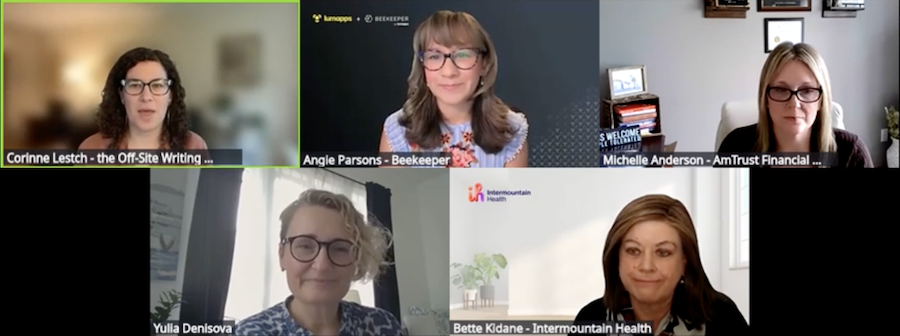
In terms of hiring, frontline workers are often spread across various geographic regions, ages, languages, and demographics—but messaging still must be able to reach and inspire them all. “It’s very important that you are not discriminating against those things and you are as inclusive as possible, and very thoughtful in terms of your learning approach and in terms of your communication approach,” Denisova said. In an organization like Fanatics, which hires a high volume of seasonal workers, having a well-defined, attractive company culture can inspire those employees to keep coming back. Fanatics recently launched its BOLD initiatives, Denisova said: “B stands for Building championship teams, O for being truly obsessed with fans, L for limitless entrepreneurial spirit, and D for determined and relentless mindset. Finding that true differentiator for your company is helpful.”
Parsons sees hiring and retention as a cycle with each impacting the other. “If there’s really terrible morale and culture, it’s going to impact [attrition], or the other way around. If the culture is great, then they’re going to want to refer their friends or for their family,” she said.
Kidane agrees that word-of-mouth is of utmost importance. “That building the brand of your organization and the culture is paramount to attracting talented workers,” she said. “And when you create a culture of excellence and a culture of caring, and your advertising out in the community reflects that, then people want to come and be a part of it.”
Investing in Frontline Workers
Denisova’s team has launched an ambassadorship program at Fanatics that lets frontline workers take on leadership roles to train new hires and teach them how to operate equipment, answer questions, and provide company onboarding. It gives those employees an opportunity to test out if they might be interested in becoming a shift manager down the line. “Those types of initiatives help create a broader engagement and a broader career advancement within the organization,” Denisova said.
Sometimes, the best professional development programs are the simplest ones, says moderator Corinne Lestch, journalist and founder of the Off-Site Writing Workshop, citing “the benefits of not overthinking these programs.” For Anderson, it means incorporating growth opportunities in discussions that workers are already having with their managers. “First, reflecting on your own personal goals and values. What do you want to do? What do you like to do? Really getting to know, not what am I doing [now], but what do I enjoy?” Anderson said. “And then helping them build a realistic learning plan and equipping the managers to have regular development conversations with them,” which can help direct them to the in-house learning tools available. “Simplicity is what is going to drive adoption.”
Offering mentoring opportunities and ways to engage in in-house networking through employee resource groups are excellent ways to encourage growth within the company. It’s also important to help frontline workers understand how their role impacts the business, to inspire them to want to do more. “Empowering the workers to see how their contributions to the business impact the bottom line can help them see, it’s not just me clocking in and clocking out,” Parsons said. “[This] coupled with performance checks and succession planning can also help inspire them to have those bigger aspirations for long term career growth.”
Katie Chambers is a freelance writer and award-winning communications executive with a lifelong commitment to supporting artists and advocating for inclusion. Her work has been seen in HuffPost, Top Think, and several printed essay collections, and she has appeared on Cheddar News, iWomanTV, On New Jersey, and CBS New York.
(Photo by NewSaetiew/iStock)