Fostering Meaningful Discussions on Women's Health in the Workplace
BY Wanly Chen
|
October 27, 2023

Dr. Leslie Saltzman, chief medical officer at family health benefits platform Ovia, knows a woman’s journey at work is far different than their male counterparts. From monthly cramps during menstrual cycles to life-changing events like pregnancy and menopause, women often endure changes that traditional benefits fail to account for.
“When we think about women’s health, it’s important to think about it from an intersectional lens. There are the obvious things that fall into that OBGYN bucket like reproductive health, breast health, fertility, preconception care and pregnancy postpartum,” Dr. Saltzman said. “But we also have to think about mental health, menopause and general women's health, particularly thinking about the diseases that affect women differently or are more common in women.”
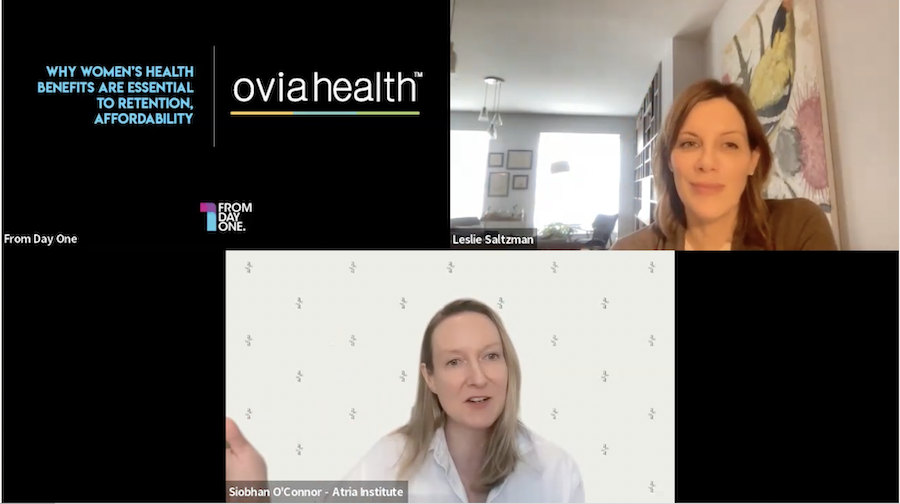
To best support women employees, companies need to provide comprehensive health care benefits that encompass these different life stages of women as well as health care issues that heavily affect women, Dr. Saltzman said. In a recent From Day One’s webinar, Dr. Saltzman sat down with Siobhan O’Connor, chief content officer at Atria Institute to discuss women’s health and the role companies have in investing in women employee’s health.
Increasing Menopause Awareness
The average American woman can spend approximately 30% to 40% of their life in menopause, yet few specialists and doctors receive in-depth education on it. This can vastly affect the conversations in the workplace, in which leaders and colleagues may take menopause concerns lightly, Dr. Saltzman said.
“Why do we treat this differently than we do any other health condition? Menopause is much longer, and it can be much more intense, and people can experience the symptoms every single day,” Dr. Saltzman said. “We need to talk about menopause and make sure that people feel comfortable talking about it by having conversations with it in your workplace or bringing in experts to talk not just to the people that are experiencing it, but also their managers and the people on their teams.”
In a 2022 study, four out of every ten women reported that menopause symptoms have interfered with their work performance or productivity weekly, with 17% of women employees having quit a job or considered quitting due to menopause symptoms. Employers can support women employees going through menopause by offering flexibility and accommodations in the workplace, Dr. Saltzman said.
“This is where we need to think about how we can be more creative to make women who are experiencing these symptoms feel more comfortable in the workplace,” Dr. Saltzman said. “Can they work from home or shift the hours that they’re working? Can they have some more control over the thermostat in the office setting or can they move their desks so they’re not having the sun shine on them that can trigger hot flashes?”
Reducing Costs Associated with Pregnancy
Pregnancy and delivery are the single largest group of diagnoses of cost for employers providing health insurance benefits, with unintended pregnancy rates amongst the highest cost burdens. Employers can help reduce these costs by teaching preventive measures and supporting healthy pregnancies.
“Helping support healthy pregnancies is the area where you see high cost savings. Preventing preterm birth and preventing avoidable C-sections are all areas where people can see cost savings,” Dr. Saltzman said.
The impact of Covid has also had a noticeable difference in U.S. maternal mortality rates, with 2021’s U.S. maternal mortality rate of 32.2% deaths per 100,000 live births, showing a steady incline from 2018’s mortality rate of 17.4%. This shows women aren’t going into pregnancy healthier, which can also cause costs to increase, Dr. Saltzman said.
“Supporting people through pregnancy even before they conceive, so they can optimize their health before they become pregnant can help save money in the long term,” Dr. Saltzman said. “For example, the average cost of preterm birth is about $100,000 in the U.S. and about 10.5% of births are preterm. If you can prevent a portion of those, there is a real cost savings associated with that.”
Moving Work Culture Forward
Offering comprehensive health benefits is only a part of the equation in supporting women employees, Dr. Saltzman said. Companies also need to create a work culture that recognizes the needs and changes of women employees.
Conversations surrounding menopause and periods shouldn’t be just limited to the women employees experiencing it. Leaders and people managers should also be invited to participate in the conversations to increase the knowledge base, Dr. Saltzman said.
“Don’t make these conversations women’s group conversations,” Dr. Saltzman said. “It can't be a divided thing as if this only applies to the people that are experiencing it because that is part of the reason why there's a stigma,” Dr. Saltzman said.
While these conversations may be difficult to have or participate in, having these conversations can help move the work culture forward, Dr. Saltzman said.
“Let everybody feel their own sense of being uncomfortable when we start talking about the pain that women experience when they have their menstrual periods or changing their pads or tampons every two hours,” Dr. Saltzman said. “We’re so disconnected from having these conversations, but the one thing that gives me promise is younger people do feel more comfortable having these conversations.”
Editor’s note: From Day One thanks our partner, Ovia Health, for sponsoring this webinar.
Wanly Chen is a writer and poet based in New York City.


