Keeping Talent Engaged and Growth Opportunities Within Reach
BY Grace Turney
|
October 05, 2026

When Central Health went looking for medical assistants, it didn’t post a job and wait. It built its own pipeline, hiring community members as apprentices and paying them while they trained, then retaining 95% of participants within the organization, says Jeannie Virden, EVP and chief people officer at Central Health.
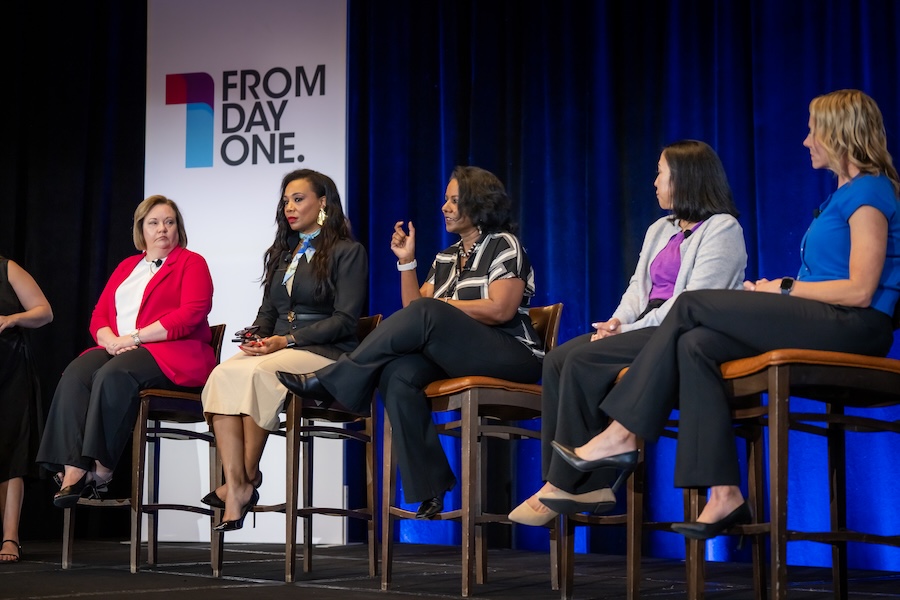
That story anchored a wide-ranging conversation on talent, growth, and burnout. At From Day One’s Austin conference, Kelsey Bradshaw, editor at City Cast and the panel’s moderator, guided HR and workforce leaders through questions about career development, financial pressure, brand identity, and the growing role of artificial intelligence at work. She noted that “one of the most important things for many employees is seeing opportunities for growth,” a theme that ran throughout the discussion.
Growth Means Movement, Not Just Titles
Aparna Samuel Balasundaram, PhD, global head of well-being, resilience, and inclusion and belonging at Wipro, says her company has changed the way it talks about advancement. “Instead of saying there’s a career ladder, we’re kind of talking about a career journey,” she said, describing a shift toward expanding employee capability rather than climbing a fixed hierarchy.
Emlyn De Leon, who leads tasks and skills redesign, strategic workforce planning at USAA, agreed that growth only works when business strategy and employee understanding move together.
Mary Wicks, talent acquisition partner, HR, North America at Tiffany & Co., says her team listens directly to employees through quarterly surveys, then builds new roles around what they hear. “We would rather keep who we have than bring in external,” she said.
Benefits Only Work If People Can Use Them
Panelists shared the importance of effective and innovative benefits as a means of keeping talent engaged. Virden of Central Health, pushed the panel past the question of what benefits exist and toward whether employees can actually access them. Tuition reimbursement is meaningless, she says, if workers can’t front the money or find time outside their shifts. “We have to make the time and the effort to make it accessible for them to go and use it,” Virden said.
Tricia Erickson, national sales director, financial wellness, at Norton LifeLock Benefit Solutions, connected that accessibility gap to the financial pressures workers face when weighing a job change. She described employers losing workers to jobs offering a dollar more an hour, only for some to return after discovering that the new employer offered weaker benefits, such as higher health costs or no 401(k) match.
That experience points to a broader challenge for employers: Benefits can have significant value, but workers may not always understand that value when making decisions about their jobs or finances. Financial wellness programs can help bridge that gap by giving workers a clearer picture of how their benefits contribute to their overall financial well-being. When workers better understand and use the resources available to them, employers can see gains in both benefit utilization and retention, she says.
Communication Builds Trust From the Top
Several panelists pointed to visibility from leadership as the connective tissue between benefits, growth, and belonging. Wicks described Tiffany & Co.’s new president touring every North American store within his first few months to introduce himself and explain the company’s direction. She said the effort helped reassure workers during a period of organizational change, giving them more context and confidence in their roles.
Central Health takes a similar approach internally, Virden says, using an education calendar that includes benefits fairs, on-site tabling, and recorded sessions for workers who can’t attend live.
Clear communication can also help address burnout. Asked how employers can protect frontline workers from burnout, Virden pointed to three levers: reminding staff of the impact of their daily work, removing friction from their work environment, and encouraging them to make real use of benefits such as paid time off and employee assistance programs.
Balasundaram added that Wipro built a manager’s toolkit focused on empathetic listening, recognizing that a worker’s sense of well-being is often shaped more by their direct manager than by company-wide policy.
AI Is Changing the Job, Not Ending It
The panel’s final stretch turned to artificial intelligence. Balasundaram said Wipro has framed AI deliberately as “human plus AI,” emphasizing how employees can reinvest the time AI saves into upskilling and higher-value work rather than simply treating greater productivity as a reason to reduce headcount.
Wicks says AI has freed her up as a recruiter to spend more time evaluating candidates who might not look right on paper but fit the brand in person.
De Leon described AI’s role as “the maker” and the human as “the checker,” meaning judgment and validation remain squarely human responsibilities even as tools handle more of the output.
Take Initiative, Don’t Wait for Tenure
Closing out audience questions, Wicks addressed employees who expect promotion simply for years served or a certification earned. Advancement, she says, requires employees to raise their hand and have direct conversations with leaders about what growth requires. “You have to just be real,” she said.
Erickson offered a parallel focus: “What are the things you can do right now that’ll make an impact. What’s something you need now in your organization that’s going to help build towards the future and the next steps?”
Grace Turney is a St. Louis-based writer, artist, and former librarian. See more of her work at graceturney17.wixsite.com/mysite.
(Photos by Josh Larson for From Day One)