The Million Dollar Patient
BY Kristen Kwiatkowski
|
October 05, 2026

The onset of a serious medical issue is often when people realize just how much healthcare can cost. That realization comes as they navigate an often confusing and daunting medical system, make difficult treatment decisions, and try to manage the financial uncertainty that comes with them.
Organizations, however, have opportunities to help workers and plan members navigate the healthcare system and manage costs while protecting the people those plans are designed to serve. Matthew Cavallo, VP of member experience at RazorMetrics, has personal experience in this area. Cavallo discussed his battle with multiple sclerosis and healthcare during a thought leadership spotlight at From Day One’s Austin conference.
The Multiple Sclerosis Diagnosis
At 28, Cavallo began experiencing symptoms that led to an MS diagnosis. What started as numbness in his feet progressed to temporary paralysis from the waist down within five days. After extensive testing, including CT scans, MRIs, and a spinal tap, doctors gave him three possible diagnoses: sarcoidosis, Lyme disease, or MS.
Cavallo engaged in various treatment methods, including outpatient physical therapy and aquatic therapy. A month later, he had a follow-up appointment with his neurologist who diagnosed him with probable multiple sclerosis. The diagnosis couldn’t be confirmed until the next exacerbation. The confirmation came six months later when Cavallo was out walking his dog, Ted, a beloved pet he had waited years to welcome into his home and who he promised to walk twice a day, every day, a promise he kept, no matter what his MS was doing.
“I’m out walking Ted one day, about six months later, and I see this pinhole in the center of my vision and by the end of the day, my whole right eye went blind,” said Cavallo. “I knew right away this was going to be another MS episode, so I went to the neurologist's office, and he diagnosed me with optic neuritis and told me that the diagnosis of MS was confirmed.”
Cavallo asked why he was experiencing an MS relapse despite weekly medication. His doctor explained that, with relapsing-remitting MS, the medication helps extend the time between relapses. A year later, Cavallo developed chest pains, forgetfulness, and difficulty finding the right words, the latter two signs of a cognitive relapse.
New Medications, New Hope
At this point, Cavallo decided to try a new medication which was an experimental treatment at that time. He didn’t want to continue battling frequent MS relapses, so he started the once-a-month treatment, and it helped Cavallo to keep MS relapses at bay for quite a while. He needed a resolution after all he had been through, including cognitive issues, sight issues, and even losing functionality from the waist down temporarily.
However, he also considered with gratitude all he had achieved: he wrote his first book, got a master’s in public health, and had two children.
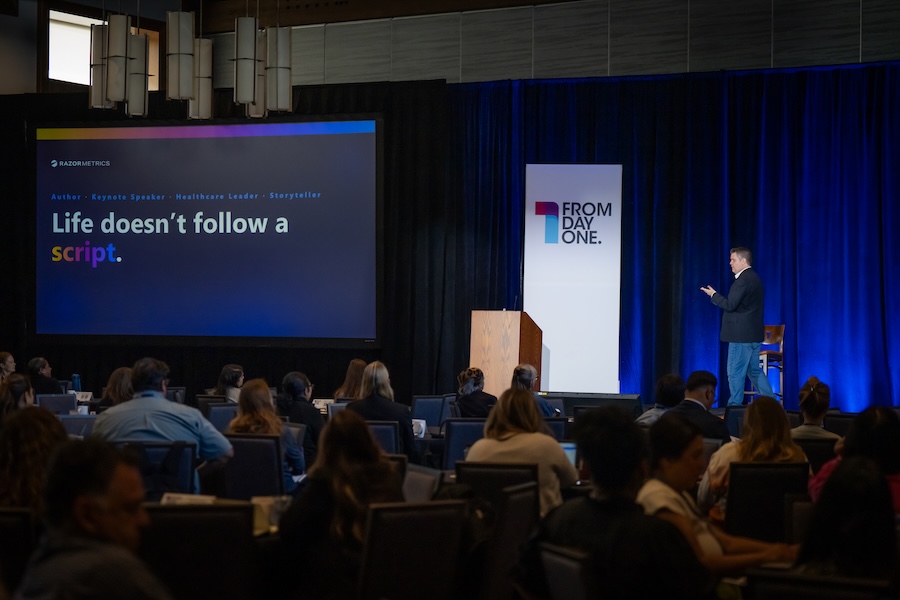
“But I was a problem for health plans because I was very expensive,” said Cavallo. “My treatment cost $90,000 a year, and then I had a bad blood test, so my physicians had to switch me.” Cavallo switched to a different medication which cost $80,000 a year, was on IV chemotherapy medications for 15 years of his life, and then finally was able to take a pill “which was a pill that allowed me an off-ramp.” It’s been three years since Cavallo has needed an MS medication.
“The total healthcare spend of my plans was over 1.4 million dollars of MS medication coursing through my veins, and I'm grateful for that,” said Cavallo. “But more importantly, I’m happy to be medication-free. I've finally achieved a point in my life where I have medication independence, and that’s what we do at RazorMetrics.”
RazorMetrics looks at pharmacy claims, analyzes drug spend, maps out plans and eligibility, and then provides options, called switch or deprescription opportunities, to the doctors to discuss with the patient regarding medication options. RazorMetrics works with the physicians, not around them.
Cavallo closed out the session with this final thought: “You don’t overcome adversity, you get through it,” said Cavallo. “You don’t choose the things that happen to you, you choose the way you respond.”
Editor’s note: From Day One thanks our partner, RazorMetrics, for sponsoring this thought leadership spotlight.
Kristen Kwiatkowski is a professional freelance writer covering a wide array of industries, with a focus on food and beverage and business. Her work has been featured in the Bucks County Herald, Eater Philly, Edible Lehigh Valley, Cider Culture, and The Town Dish.
(Photos by Josh Larson for From Day One)