What's Going On? How You'll Finally Solve the Age-Old Marketing Question in 2026
BY Paul Kersey
|
May 07, 2026

AI has turned marketing into a high-speed content machine. But as the volume of AI-created content explodes, marketers face a new challenge: standing out while maintaining quality, consistency, and a recognizable brand voice.
George Huff, CEO of Opal, suggests that marketing leaders fight fire with fire, harnessing specialized computer systems and AI to track output and guide creative professionals. He spoke during a thought leadership spotlight at From Day One’s Silicon Valley marketing conference, sharing his approach to a software suite tailored for marketers, one that enables collaboration and streamlines the organization of content throughout the production process.
Huff had long been fascinated by marketing, especially the creation and growth of brands. As a young consultant in Portland, Oregon, in 2012, he had a front-row seat as Nike expanded its footprint in athletic shoes and apparel. One moment that stuck with him was how difficult it was for Nike executives to monitor the output of their large marketing team. As both sponsor and outfitter, Nike was deeply involved in sporting events around the world, yet leaders often struggled to see what their teams were actually producing for those events.
That disconnect stood out at a company that otherwise excelled at building and protecting its brand. Recognizing the challenge ultimately led Huff to start Opal, a company focused on helping organizations better manage and coordinate marketing teams and their work.
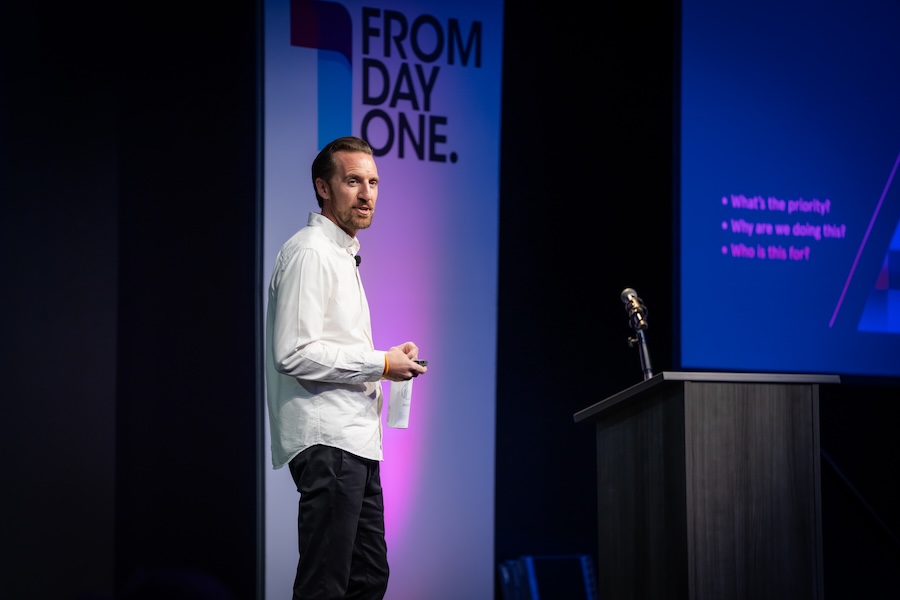
“We’re almost like anthropologists of marketing teams and marketing workflows,” he said. What the team at Opal has found is that there are serious structural impediments that make marketing teams difficult to manage. The creative people who generate the content tend to work as individuals, and the system has to allow them freedom, he says.
But assembling and organizing the material they generate, including text, images, audio, and video, requires a significant amount of time and labor. Information has to be compiled into memos or slide decks. It does not happen automatically. It then has to move up and down a multilevel corporate structure. Meetings can be lengthy, and there are often moments of panic when things go wrong and executives need to be quickly brought up to speed on content they are not familiar with.
All of this results in what Huff calls “friction.” The process is laborious, and each level of bureaucracy creates room for misunderstanding. Executives can’t always get a quick response if they want to know what content is being created for a key event. And if they can’t see the material quickly, they can’t respond quickly to problems and shape the content so it fits the company’s marketing strategy.
Things will likely get worse before they get better. This year, roughly half of marketing content will be AI-generated, says Huff. Much of it risks turning into slop: images of people with extra fingers, or copy that feels choppy and mechanical. Even if teams are sharp-eyed enough to catch the obvious AI-generated mistakes, the sheer volume of content will make tracking, reviewing, and evaluating everything far more time-consuming than it is today.
Opal’s vision is to make content generation a more “multiplayer mode” process, using software that encourages collaboration while simplifying the collection and distillation of content into formats that are easy to review, says Huff. Its platform helps teams organize campaigns and events, making it easier for managers to identify and evaluate content as creative staff collaborate.
By streamlining coordination and oversight, the goal is to help executives ensure that marketing output stays aligned with a company’s brand and overall strategy. “We believe that alignment should be a low friction activity” Huff said, as opposed to fire drills. Huff’s goal is to make much of the alignment work automatic, so executives, managers, and content creators can focus on delivering a great experience for customers.
Editor’s note: From Day One thanks our partner, Opal, for sponsoring this thought leadership spotlight.
Paul Kersey is a former attorney and freelance writer who has covered events for Bloomberg News and other outlets. Paul is based in Chicago, IL.
(Photos by Josh Larson for From Day One)