Making Total Rewards a Strategic Retention and Engagement Tool
BY Emily McCrary-Ruiz-Esparza
|
July 08, 2026

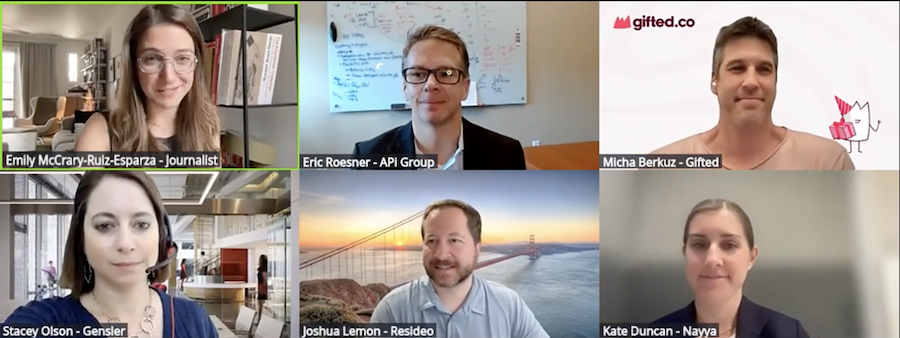
“As HR professionals, we think in terms of compensation, health, retirement, well-being, and recognition, but employees think about things in terms of, ‘Can I afford my life? Do I feel valued? Does my company care about me?’” said Joshua Lemon, head of AI and compensation at smart home tech company Resideo. Lemon and four other leaders of HR and benefits were part of a panel discussion about using total rewards for engagement and retention during From Day One’s June virtual conference.
And, indeed, communications matter. According to Mercer’s 2025 Health on Demand Report, 79% of employees that receive communications about their benefits say the company cares about their health and well-being.
To better tailor their outreach, Resideo created personas for employee groups, like employees with young families, for instance, and target communications programs based on common needs and concerns, says Lemon. “That makes it much more approachable, much more relatable, and the messaging really hits a lot stronger,” he said. But, Lemon says, it takes more than just mailers and email blasts, no matter how segmented. “How well are your HR business partners and your managers scripted to talk about benefits?”
Benefits access should also slide nicely into the flow of work, said Kate Duncan, the chief people office at benefits technology company Nayya. “If your employees are using Slack, can you get benefits information distributed in that way? If everyone knows to go to your intranet or your hub, make sure your benefits information is available there and accurate.” There are plenty of tech platforms meant to make benefits access as easy as possible, but can they nudge employees based on preferences and needs? And if they’re AI-powered, how accurate is the LLM?
A company might have a robust package, but in a crisis, no one can shuffle through a dozen point solutions to find what they need. That’s why global business services provider APi Group uses a concierge service that connects employees to what they need when they need it. The point isn’t to sell vendors by their brand names or their value propositions, says VP of total reward Eric Roesner, it’s about meeting a need.
Employers should consider those elements beyond healthcare and retirement plans, said Stacey Olson, who focuses on the physical environment for clients at the design firm Gensler. “You can provide all the opportunities for mental and physical health, but if the people don’t feel they have the capacity to make use of those things, whether it’s because they don’t have the time in their schedule, the space, the privacy, or a sense of security, then they will go unused.”
“Do they feel a sense of purpose when they come into their space—physical, intellectual, and so forth?” she said. “How are we designing space that allows people to connect?” Workplace relationships, especially with one’s manager, have an impact on employee engagement and retention, and Olson says employers should design physical spaces—whether offices or hospitals or shop floors—that facilitate those relationships.
The small things matter too. “Finding and capturing bright moments to engage with your team is probably one of the most important things, and it doesn’t always have to be something huge,” said Micha Berkuz, CEO of employee recognition company Gifted. “If someone is sick at home, we will send them a small gift with a DoorDash, Uber Eats, or a Grubhub gift card, just to save them the trouble of cooking lunch. If you capture those special moments at the right time, it’s a low-cost, high-impact way to connect.”
Personalization goes a long way, especially when it comes to messaging. More than half (54%) of employees say they want personalized benefits communications, according to MetLife’s 2023 Employee Benefit Trends study.
Panelists agreed that AI can help make that possible. “All of our employees are at different stages of their lives, have different needs, and are in different circumstances,” said Duncan at Nayya. “We can’t expect them to remember the benefits that they enrolled in at open enrollment time, let alone the benefits that were newly rolled out two years ago.” Access to an informed GPT can remind them at the right moment.
“You have a workforce, who, somewhat regardless of generation, understands what an LLM is, and they use it in their personal lives,” said Roesner at APi Group. “The part I find so interesting is the ability for it to retain and build on history.” LLMs learn an employee’s unique circumstances and what’s important to them. “It’s really powerful, and I also think it’ll be transformative.”
Emily McCrary-Ruiz-Esparza is an independent journalist and From Day One contributing editor who writes about business and the world of work. Her work has appeared in the Economist, the BBC, The Washington Post, Inc., and Business Insider, among others. She is the recipient of a Virginia Press Association award for business and financial journalism. She is the host of How to Be Anything, the podcast about people with unusual jobs.
(Photo by Benjamas Deekam/iStock)