Innovative Benefits for a Workforce with Diverse Needs
BY Katie Chambers
|
September 17, 2026

The 10,000 employees at Seattle Children’s Hospital are made up of a wide variety of professionals: nurses, physicians, environmental service technicians, facilities workers, supply chain employees, administrative support teams, researchers, and foundation fundraisers—to name just a few. Because of this diversity of experience and demographics, the organization needs a flexible, comprehensive benefits program that can serve them all.
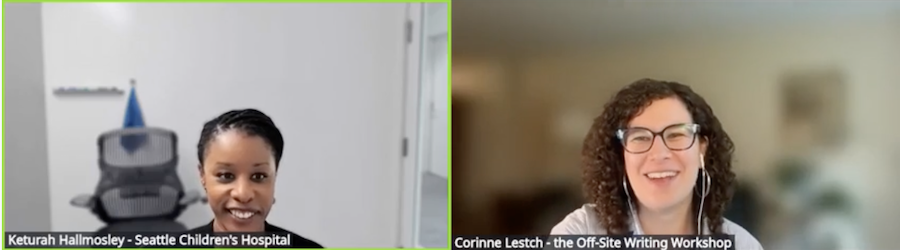
As workforces become more multigenerational, distributed, and varied in their needs, employers are looking beyond traditional medical and dental offerings to build benefits programs that support workers more holistically. During a fireside chat at From Day One’s September virtual conference, Keturah Hallmosley, deputy CHRO at Seattle Children's Hospital, shared how she is building benefits for the frontline workforce, using worker feedback to shape offerings and exploring creative approaches to healthcare, childcare, transportation, recognition, and more.
Understanding the Diverse Workforce
Seattle Children’s tiered benefits structure was designed eight years ago. “Everyone has a very different family makeup, a different pay structure, and so [what] our benefit tiered structure does best [is] to meet employees where they’re at. And so, if you make more, you pay more,” Hallmosley said. “[We] want to make sure that we are continuing to evolve our benefits for the needs of what our employees have shared, and also make sure we’re aligning to the market, and this particular strategy really does help us do that.”
Her team finds that AI has helped them better understand and respond to employees’ needs. In addition to launching Google Gemini organization-wide, “we have an interactive tool as well that’s specific to benefits.” The tool lets employees ask what their current benefits are, how they change, and provide family details to see how to best utilize what is on offer.
“One of the challenges that we have today is that sometimes we get so much feedback, it’s hard to compile it into themes and be more direct and honest about what we are able to do and what we are not able to do,” Hallmosley said. “This year, we are in the process of implementing a new [AI] tool that will help employees to understand what’s right for them, and then also we’ll be able to look at the information from a trends and themes perspective to proactively think about what ways we can continue to evolve our benefits.”
Building a Robust Benefits Package
In addition to comprehensive medical and dental offerings, Hallmosley says Seattle Children’s offers additional options to fit the lives and varied generations of its workers, such as pet insurance and childcare and eldercare benefits. The employee assistance program can also be used to confidentially discuss options like mental health support or legal counseling.
And while it may not fall in the traditional “benefits” category, Hallmosley acknowledges other perks that come with working at Seattle Children’s and can help attract, engage, and retain employees. “We have a very large community presence, so that’s where we partner with the engagement and retention team. If you go to this restaurant, you have these options. If you go to this gym, there are these options. The team thinks about it from a holistic perspective,” she said.
There’s a staff member dedicated to focusing on well-being, and the organization launched a tool called Wellable, which links up with your smartwatch and tracks well-being activities. “You get points [and] when you’re at the top, you get entered into our system that we use for recognition to get some additional points, and you can cash those in for Seattle Children's Apparel as well as gift cards,” Hallmosley said. “I appreciate that pairing of well-being and recognition to reward individuals for taking care of themselves.” The team continuously tracks engagement in partnership with the vendor, teaches employees about the app during orientation, mentions it in employee forums, and offers competition events to encourage usage.
Of course, the world of benefits is changing as rapidly as our culture. “Is there any sense of what direction the priorities are going to go in, or if there’s going to be any change in headwinds on the benefits front?” asked moderator Corinne Lestch, journalist and founder of the Off-Site Writing Workshop.
“At this point in time, I think what people are looking at is, ‘What is the whole benefits package?’” Hallmosley said. That means covering every phase of life from children’s healthcare through retirement. “Where we’re working to be different is making sure that we’re being deliberate [in] involving our inclusion networks and also making sure that we’re gathering feedback from front lines. I think the challenge for us is that there is no shortage of ideas around how benefits can improve, and being able to communicate what is possible versus what is something that we cannot invest in is an item that we’re constantly challenged with.”
Investing in the Future of the Workforce
For full-time frontline workers, Seattle Children’s offers the same full package it allows everyone else, including tuition reimbursement and retirement options. “We are very intentional in helping people understand that Seattle Children’s can be a career for you,” Hallmosley said. “We have a multigenerational workforce, which is not uncommon, but I think being deliberate about the different needs and communicating that to our frontline employees is really important.”
The organization also recognizes the unique challenges and opportunities of working in Seattle. The benefits and transportation teams work closely together to support carpooling, automatic deposits for Orca cards for public transportation, or even provide “commute bonuses” for those who work remotely.
Going forward, Hallmosley and her team see “there is opportunity to continue to listen and to see what is possible and what we continue to build upon.” This can be a challenge, given rising costs. “We work hard to make sure that if we can’t do a particular coverage or benefit option, [that we] identify what might help meet individuals in the middle around covering medications or covering services, even if we can’t look at the whole package.” This individualized service within such a large organization is one of the things that sets them apart. “Our benefits team is very cued into if an employee is struggling, and [thinking], ‘How can we partner to figure that out?’ Always looking to say ‘yes,’ even if it’s not ‘yes’ to the whole thing. It’s listening and being creative about what's possible.”
Katie Chambers is a freelance writer and award-winning communications executive with a lifelong commitment to supporting artists and advocating for inclusion. Her work has been seen in HuffPost, Top Think, and several printed essay collections, and she has appeared on Cheddar News, iWomanTV, On New Jersey, and CBS New York.
(Photo by Unaihuiziphotography/iStock)