Listening to the Employee Voice to Shape Smarter Total Rewards
BY Carrie Snider
|
January 05, 2026

Designing a total rewards program today is less about checking boxes and more about managing tradeoffs. Employers are trying to meet specific employee needs without fragmenting the workforce or leaving others feeling overlooked. At From Day One’s Los Angeles conference, that challenge took center stage as leaders discussed how listening more closely to employees can shape benefits that feel both targeted and inclusive.
Jon Harold, head of sales and partnership success at SoFi at Work, underscored the importance of targeting benefits thoughtfully. “You do have to balance fairness with the actual needs of the business,” he said, “because at the end of the day, the business is here to make money and to grow.”
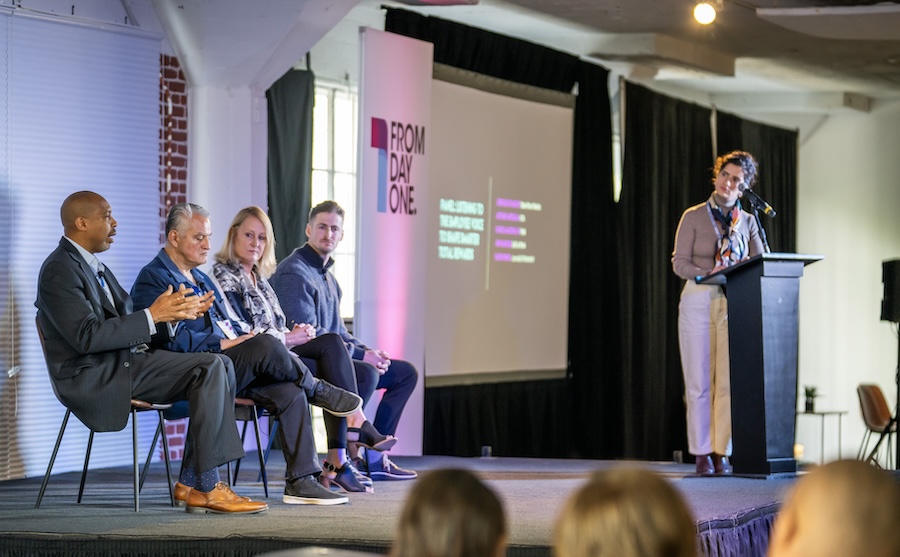
Moderated by journalist Faith Pinho, Harold and a panel of other experts from across industries discussed how smarter total rewards start with the employee voice and extend to financial well-being, career growth, flexibility, and perks that truly matter.
Targeted programs, like student loan repayment assistance, can deliver significant impact, says Harold. “Imagine coming out of college, you have $35,000 of student debt, and off the bat, your company is contributing $5,000 a year—that’s incredibly powerful and impactful,” he said. Yet, leaders often worry about perceptions among employees who don’t qualify. Harold points out the perspective many overlook: “Do you think those employees wish they had student debt so they could take advantage of it?”
Successful organizations pair targeted benefits with offerings that reach all employees. “If you’re launching a financial wellness program, you can help with your student debt, talk with a financial coach, plan your estate, manage your credit—something that appeals to everyone,” Harold said.
Offer Highly Valued, Specific Perks
Creating a benefits package that resonates with employees means going beyond standard offerings. Arturo Arteaga, VP of total rewards at VCA, emphasizes that understanding employee needs firsthand is critical.
“You need to keep contact with them all the time,” he said. “You need to know about them. You need to visit—in our case, we have close to 1,000 hospitals—talk to the CSR, talk to the bed techs, talk to the doctors and understand what they want.”
Targeted perks can have a significant impact. For example, VCA’s associate pet discount, which allows employees to receive meaningful discounts on veterinary services, is by far the most appreciated benefit of the company. Similarly, professional development support, including PTO and funding for certifications, is highly valued by veterinarians and veterinary technicians. “What they appreciate the most is to have time and resources for continuous education,” Arteaga said.
Piloting new benefits helps manage cost and expectations, especially in large organizations. “Any benefit is expensive, and we need to be very careful about what we introduce and what we don’t introduce,” he said. For employees on their feet all day, VCA introduced a musculoskeletal treatment program after learning directly from staff about the physical toll of their work.
Explore Innovative, Employee-Driven Benefits
Modern total rewards strategies increasingly focus on flexibility and innovation, giving employees more control over how they use their benefits. Carol MacKinlay, chief HR officer at Pebl, says employees want options that let them manage their own lives.
“People want to control their money,” she said. “They were willing to trade that risk for the reward,” she said, referring to a program where employees could trade bonuses for guaranteed salary increases.
Gamification and creative engagement strategies can make benefits more meaningful. MacKinlay says. “People love it. We’re trying to customize, giving people fun things to do, reasons to participate,” she said, describing how compliance training and other programs are turned into competitions to drive participation.
Forward-looking approaches also tap into emerging financial trends. “About 30% of employees want to get paid in crypto,” MacKinlay said, highlighting Pebl’s exploration of digital payment options to meet employee needs, particularly in regions with high inflation.
Beyond financial benefits, time and feedback can serve as powerful rewards. Spot awards of time off recognize extra effort and reinforce work-life balance, while a structured, partially transparent feedback system gives employees insights into their performance.
By offering benefits that employees can shape and control, organizations not only meet immediate needs but also position themselves for long-term engagement, satisfaction, and retention in an increasingly diverse and global workforce.
Prioritize Development & Transparent Performance Conversations
In today’s competitive talent landscape, benefits alone aren’t enough—how organizations handle performance and growth can be just as important. Jerrold Coakley, SVP of HR at Stater Bros. Markets, emphasized the value of clear, early conversations around remote work and career progression.
“It’s far better to have that conversation early, although it’s uncomfortable,” he said, referring to discussions about whether certain roles can be performed remotely and how that may impact advancement.
Coakley advocates for performance-based differentiation over perceived fairness. “We’re not here to be fair,” he said. “We’re trying to get the top talent in the top roles and pay them the top dollar.” HR leaders should be transparent about expectations, rewarding those who deliver and making career growth contingent on measurable contributions.
Simplicity in benefits also drives impact. Programs that are easy to implement, such as time off, spot bonuses, or additional pay, provide tangible value without unnecessary complexity. “The more you can over-invest in areas you know you can execute, you’re going to find that it’s very beneficial for your employees and very easy for you to execute,” Coakley said.
Perhaps most importantly, investing in employee development builds engagement and loyalty. “Development is the number one thing,” he said. “Invest your top talent, let them know how much they mean to you.” Growth opportunities, combined with clear expectations and transparent feedback, help employees feel valued and empowered, reinforcing both performance and long-term retention.
Successful total rewards programs start with the employee voice. From financial wellness and meaningful perks to career development and innovative, employee-driven options, the key is listening and responding, panelists agreed. Thoughtful design, clear communication, and investment in growth create a culture where employees feel valued and motivated, driving engagement, retention, and long-term organizational success.
Carrie Snider is a Phoenix-based journalist and marketing copywriter.
(Photos by Josh Larson for From Day One)


