AI-Powered Personalization: Scaling Relevance Without Losing the Human Element
BY Carrie Snider
|
October 16, 2026

AI can personalize a message in seconds. Making that message meaningful is still a human job.
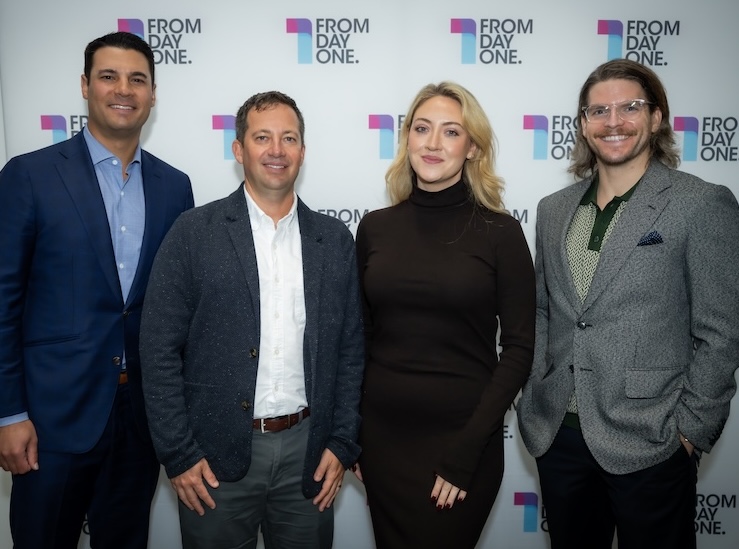
At From Day One’s Chicago marketing conference, marketing leaders discussed how to use AI to scale personalization without overwhelming audiences with generic content. Moderated by Alex Maragos, anchor and reporter at NBC 5 Chicago, the panel explored how marketers can work smarter, preserve creativity and build stronger customer connections.
Build a Shared Knowledge Base to Power AI
Effective AI implementation starts with giving the technology the right information, according to panelist Connor Laughlin, VP of marketing and go-to-market at Transworld Systems Inc. (TSI).
His team began exploring AI with TSI’s proposal-writing group, which handles a high volume of requests for proposals (RFPs). The company expects to respond to about one and a half RFPs daily, and the team generates 60% to 65% of new business. Laughlin saw an opportunity to use AI to make that workload more manageable.
Early experiments with custom GPTs eventually led to a comprehensive audit of the content, information and data used across the company’s go-to-market operations. Today, employees can connect their AI tools to a shared knowledge base that helps them understand TSI’s business.
As Laughlin said, the resource helps each tool become “a domain expert in all things TSI.” But better technology doesn’t automatically mean better marketing. Laughlin warned against flooding audiences with AI-generated emails and social posts simply because production is easier.
“We are developing an eye for the vibe, for the feeling that it’s uncanny,” he said. Instead, he encouraged marketers to understand their customers, clarify their messaging and focus on the problems their products solve. Combining AI with thoughtful content creation can help companies scale their efforts without sacrificing authenticity.
Keep Humans Responsible for Creativity
Panelist Andrew Racine, VP of demand generation and growth at Writer, says marketers must remain accountable for the quality and relevance of AI-generated content.
By connecting information from Slack conversations, Salesforce records and sales calls, marketers can better understand customer challenges and personalize their approach. However, Racine cautioned against crossing the line between relevant outreach and excessive, impersonal communication.
“We approach it in our company as a human in the lead,” he said. Racine warned that marketers risk repeating past mistakes, such as overwhelming audiences with automated emails and excessive advertising. AI makes producing content easier, but more output doesn’t necessarily create more value.
“Would you respond to this?” He added that marketers should evaluate messages from the customer’s perspective before sending them.
AI can also help marketing teams become stronger partners to sales. Beyond generating leads, marketers can use it to understand what sales representatives need to advance deals, reach decision-makers and build customer relationships.
Successful adoption also requires helping employees rethink their workflows. “It is 99% change management, not the technology.” Leaders must show employees how automation can free them to focus on higher-value work while maintaining human oversight and strong data governance.
Prioritize Value Over Volume
Panelist Amanda Rosso, head of global integrated marketing campaigns for money management at Stripe, says marketers must be intentional about the content they create as AI makes personalization easier to scale.
At Stripe, craft and quality are central to the company’s operating principles. Yet consumers are increasingly overwhelmed by targeted messages that offer little substance.
“I’m personally inundated with messages that are built for me, but also don’t say a lot,” Rosso said. She uses AI to refine her writing and explore creative options but prefers to develop her initial argument herself. Without a strong foundation, she warned, AI can gloss over gaps in reasoning and make weak ideas sound more convincing than they are.
That discipline should extend to campaign planning. The ability to produce more content doesn’t mean audiences want more information. Marketers should simplify their messaging and focus on what customers need to know. “We still need to simplify and land the same messages in a way that our users understand,” she said.
Rosso also stressed that marketing should offer genuine value to sales teams and their customers. Whether creating events, reports or emails, marketers should provide resources that salespeople feel confident sharing because they genuinely help the recipient.
Personalization also requires responsible data use. Rosso sees opportunities to deliver timely, relevant messages directly within products, where customers can receive information tailored to their needs. But accuracy, privacy and security must remain priorities.
AI may be changing how marketers work, but the fundamentals haven't changed: understand your audience, offer something valuable and earn their trust. The challenge is knowing when to let AI do the heavy lifting and when human judgment needs to take the lead. The marketers who get that balance right will be better positioned to create personalized experiences that feel less like automation and more like genuine connection.
Carrie Snider is a Phoenix-based journalist and marketing copywriter.
(Photos by Josh Larson for From Day One)