Culture That’s Real: Bringing Company Values to Life
BY Jessica Swenson
|
December 18, 2025

“Everyone wants to have a good culture, but they don’t really understand how much time and energy and effort it takes,” said Bert Hensley, chairman and CEO of Morgan Samuels Company. He believes that employees should be empowered to co-create and shape the culture in which they work.
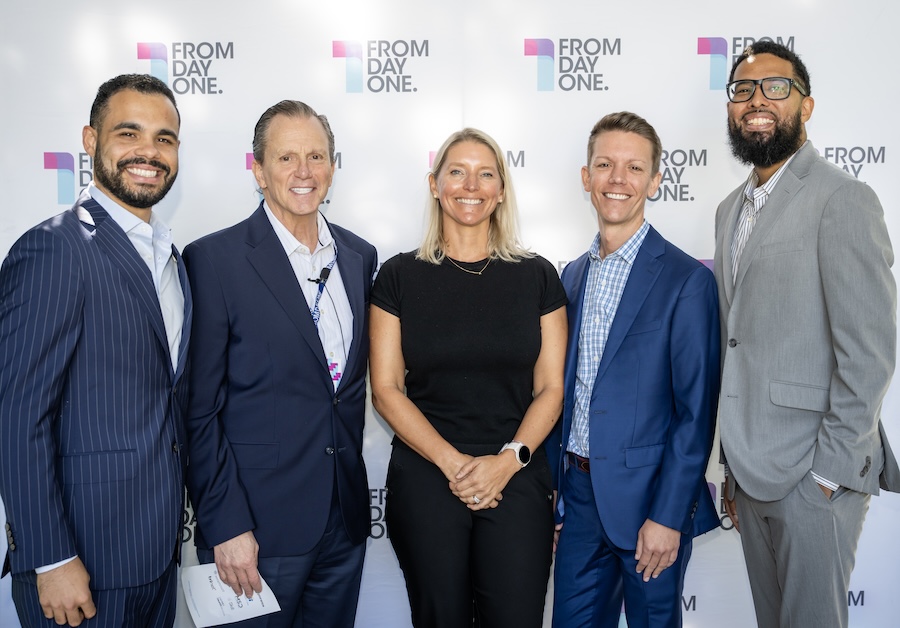
During a panel at From Day One’s Miami conference, moderated by Miami Herald business reporter Michael Butler, Hensley and other executive leaders discussed how organizations can cultivate cultures that embody the company’s values while both challenging and supporting employees.
Companies need to determine “what kind of organization they want to be, and what kind of people need to be a part of it,” said Jonathan Méndez, head of executive search and HR business partner at Kellanova. Ensuring that talent aligns with the company’s purpose is key to preventing cultural tension.
This knowledge is also crucial for any executive search and other new talent decisions. Identifying key business objectives, knowing the requisite skills and experience, and being aware of cultural considerations are vital to finding candidates that share the company’s values, says Hensley. He recommends in-depth, in-person meetings with teams seeking new talent to better understand how they interface and operate before assessing or recommending candidates.
Referencing a shared ownership model emerging at his company, William (B.J.) Warren, the head of HR effectiveness at Bayer, says they are seeking to remove hierarchical roadblocks and empower the people closest to the customer to take on decision-making. This allows the relevant groups to determine “what is it that best meets the needs of [our] customers, versus the challenge of ‘who do I need to report to or get approval from in order to really take those decisions?’”
Belonging & Safety
Employees need to feel safe and seen in order to have a sense of belonging in the workplace. Abbe Partee, DHL Supply Chain’s head of culture and inclusion, oversaw the development and launch of the company’s Belonging at Work program. This program allows for deeper conversation and connection through training focused on inclusion and psychological safety, and it has delivered a lift in employee engagement and Great Place to Work scores.
“We want you to feel that you’re connected, you contribute, you’re valued, and that’s where you get this sense of belonging. But it’s not just up to the leaders to create the culture of belonging. It’s up to everybody,” she said. By holding all employees accountable not only to performance, but to behavior, DHL maintains clear focus on its values of respect and results. “If you get results without respect, you are not part of this culture.”
At the same time, advises Méndez, while a culture steeped in niceness can attract and retain talent, too much focus on being nice can inhibit healthy conflict and innovation. To offset the influence of Midwest nice culture at Kellanova, he says, the company has focused on amplifying its core values while introducing a new one: courage. They “[bring in] talent that has those values and has that courageous mentality, but in the day-to-day work we try to encourage that type of behavior to really push the organization forward.”
Centering diversity initiatives on the customer base and business results is another way to realize a company’s values around belonging and safety. Hensley’s executive searches have a 40% diversity rate (exceeding the industry average of 12%) because they search more broadly for the correct fit for a role rather than hiring for diversity quotas. “Diversity works best when integrated into business operations, not treated as an add-on,” said Warren.
Partee and Méndez agreed that the employee population and upper-level leadership—including the C-suite—need to reflect the customer base that an organization serves. “There’s more innovation, there’s more creativity, there’s better problem solving. When you have diversity at all levels of the organization, it just makes sense for your business,” said Partee.
Restoring HRBP Credibility
Acknowledging that HR is sometimes viewed primarily as a policy enforcer, several panelists agreed that HR teams need to act as business partners first to rebuild credibility and confidence in the function. In his first three weeks with Kellanova, Méndez met with all 200 of his team members. “It was an incredible learning opportunity to understand the business and the people, and if you understand your people first you’re able to start breaking down that barrier.” Knowing the pain points and performance impacts of the business gives HR leaders credibility and allows them to provide better input.
To ensure that culture flows through all levels in an organization, executives need to put themselves in situations where they are “shoulder-to-shoulder with their employees,” Méndez said, and encourage their leadership teams to do the same. “That visibility creates trust. If you don’t have that visibility, and if you’re in that ivory tower, in your office with the door locked, you’re not going to ever have that relationship.”
Partee has added board-level sponsors to employee resource groups at DHL, putting those senior leaders in a position to “spend much more time with people of different identity groups, listening to them, hearing about what their challenges could be, and getting a different perspective.”
Warren suggests expanding the use of 360-degree reviews and peer feedback to help close performance and communication gaps. He also cautions that prioritizing systems that check boxes rather than prioritizing people can complicate processes and erode trust. Historically Bayer has led its HR transformations with technology changes that enable processes, he says, but with their new self-organized team approach they are now “much more focused on the people first. The process and technology can follow.”
Jessica Swenson is a freelance writer and editor based in the Midwest. Learn more about her at jmswensonllc.com.
(Photos by Josh Larson for From Day One)


