Calm in the Storm: the HR Leader’s Role in Advocating for Well-Being and Mental Health
BY Jessica Swenson
|
January 08, 2026

As pressure on employees continues to rise, some companies are rethinking where responsibility for well-being sits inside the organization. At Fox Sports, that responsibility lives at the intersection of HR and business operations, according to Kim Beauvais, EVP of HR and business operations, who spoke with The Ankler’s executive editor Alison Brower at From Day One’s Los Angeles conference.
She sees the combination of HR and business ops as “how the organization moves within the business to take care of its biggest investment: its people.”
Beauvais praises Fox’s benefit programming—especially its mental health resources, which include access to the Calm app for each employee and their family along with a comprehensive employee assistance program (EAP) and specialized care through Maven for women across the fertility spectrum.
She acknowledged the dual role of HR as both a risk manager and employee advocate, and the need for transparency about this dynamic. However, there are clear instances where employee advocacy is the top priority; at these times, she says, it’s up to HR to have the tough conversations with leadership or finance to initiate change.
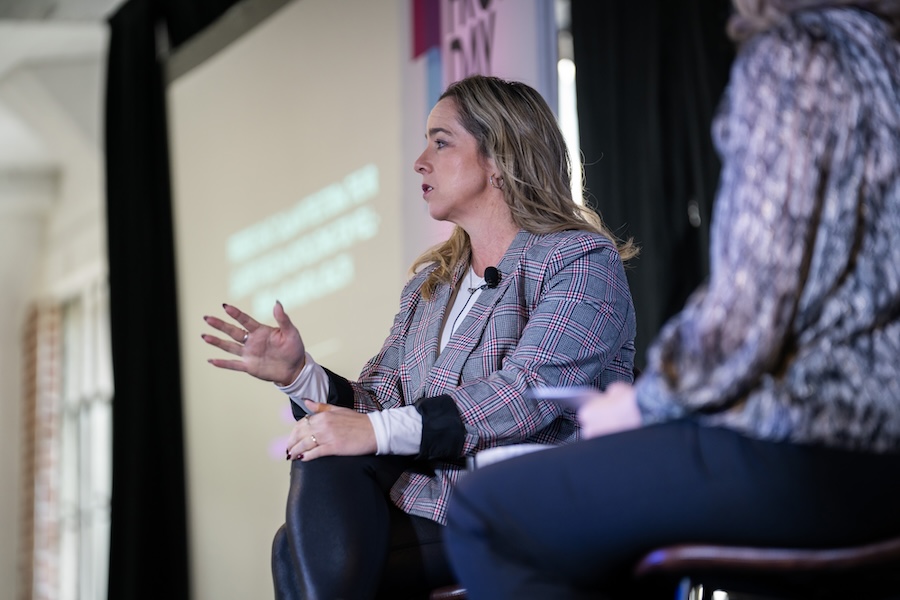
One such situation occurred recently at Fox Sports. Before Covid, the EAP program was available only to full-time, benefit-eligible employees, Beauvais says. But as the pandemic highlighted a widespread need for mental health support—the company saw a 400% increase in mental health calls during and after Covid—she and her team realized a need to expand the program to its thousands of freelancers as well.
“We talked to the unions about it, [saying] this isn’t a condition of bargaining. We just need to make sure our people are taken care of. It obviously took a lot of conversations, and there’s a financial impact to that, but I think post-Covid it became ‘How do we take care of our people?’ And this was an easy way to do that.”
To learn more about the experience of front-line production employees, Beauvais has made a concerted effort to humanize her team by embedding them with production crews. This helps her HR leaders more directly understand the needs and struggles of the teams they support, and answer questions like “Why are [people] still working here? What do [they] wish was different about working here? What are the struggles about being on the road for 13 weeks straight?”
Integration with these teams has caused a noticeable shift. Crews welcome HR partners into their environment and are no longer scared when they call or show up, she says. It has also given leaders insight that enables smaller-scale interventions with big impact, like offering UberEats credits to employees that have been on the road for long periods so they can share a meal with their families, or implementing a breast-milk shipping program to support new mothers returning from maternity leave into travel-heavy roles.
“Building trust and having conversations with HR folks,” said Beauvais, enabled HR leaders to introduce the program and facilitate conversations with male production managers on behalf of these new mothers. “That’s an uncomfortable thing as a female, to talk [about breast feeding] to your male production boss that’s been doing TV for 25 years. So, we had those conversations and everybody was super supportive. It made for a much more inclusive environment on the road.”
This demonstrates the company’s culture of ensuring that employees feel safe and know they are valued. Meeting employees where they are can be taught in new manager training, Beauvais says, but coaching leaders in real-time is really the most effective support. Her HR leadership team meets regularly with managers and uses role-playing to prepare them for tough conversations and emotionally complex issues. “We can’t be there every second of the day, but having those regular check-ins is really important.”
It’s crucial for employees to feel safe to bring their whole, authentic selves to work, says Beauvais—and it seems that they do. The company has employee tenures exceeding 35 years, a testament to its culture and a strong sense of belonging. “Because money is not the only currency. It’s all the other things that bring them to work every day, like enjoying being with [their] co-workers and doing a really good job so that they continue to feel fulfilled.”
Jessica Swenson is a freelance writer and editor based in the Midwest. Learn more about her at jmswensonllc.com.
(Photos by Josh Larson for From Day One)


