Supporting and Retaining the Frontline Workers Who Keep the Business Moving
BY Carrie Snider
|
October 08, 2026

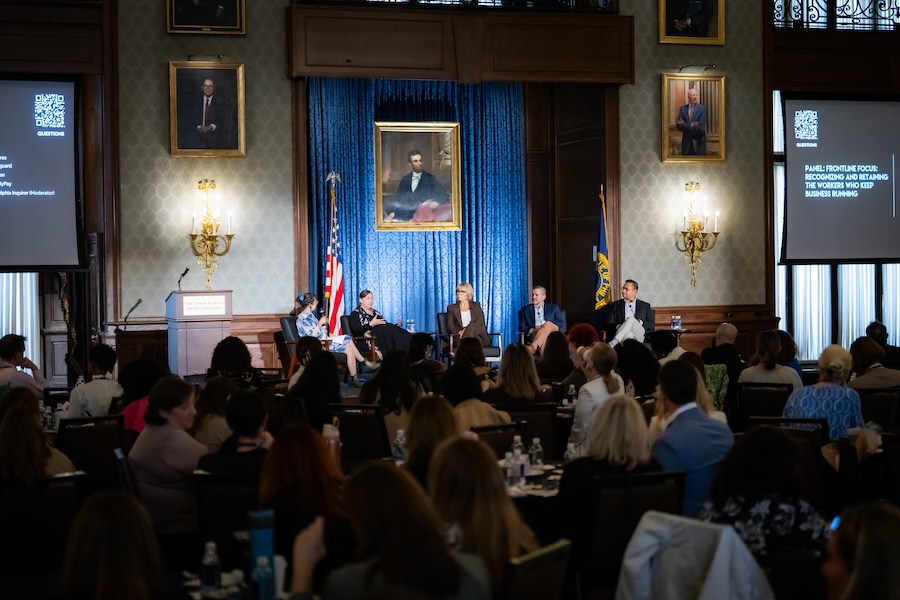
Frontline workers keep businesses moving, yet they can be among the hardest employees to engage and retain. At the From Day One’s Philadelphia conference, a panel of HR and workforce leaders explored practical ways employers can better recognize, support and retain these essential employees.
Their advice pointed to a common theme: Retention starts with creating a workplace where frontline workers feel heard, supported, connected and genuinely valued.
Listen, Then Act
For Burlington Stores VP of HR Cora Claus, retaining frontline employees starts with a simple but often overlooked step: listening to what they need.
Having supported both store associates and corporate employees, Claus understands the divide between frontline and office environments. She encourages leaders to ask employees what would make a difference in their work lives, then take action where possible. “It’s asking the question, listening, and then being able to actually take action where you can and explaining why you can’t when you can't,” Claus said.
That might mean adjusting schedules to give employees more hours or making it easier for them to pick up additional shifts. The key is identifying practical solutions rather than assuming every concern requires a major policy change.
Recognition also needs to become part of the daily routine, even when managers are juggling competing priorities. With up to 100,000 associates across its stores, Burlington faces the challenge of making meaningful connections at scale.
Claus says that successful locations often have leaders who take time to know their employees personally. Instead of immediately listing the day's tasks, a manager might ask about an employee's daughter's birthday party. “It’s those simple steps of actually acknowledging the people who are doing the hard work for you,” Claus said. Those small moments of connection can help employees feel valued, strengthening engagement and giving them more reasons to stay.
Support Financial Well-Being
For frontline workers, financial stress can have a direct impact on their experience at work. Catherine Whitelaw, VP of strategic sales and partnerships at DailyPay, says employers can help by offering benefits that give workers greater control over money they have already earned. “It’s their money, let them access it when they need it, not just on payday,” Whitelaw said.
That flexibility can be particularly valuable for workers living paycheck to paycheck or juggling multiple jobs. Rather than turning to overdrafts or high-cost loans when an unexpected expense arises, workers can access earned wages when they need them.
But Whitelaw says financial well-being goes beyond simply providing access to pay. Digital tools can give employees greater transparency into their earnings and help them build healthier financial habits through features such as savings tools and credit monitoring. “They have complete transparency on what they just earned,” she said.
Workers who can see what they’ve earned may be more likely to pick up additional shifts because they can see their progress toward a financial goal, she says. For frontline employees balancing work and everyday financial pressures, giving them practical tools rather than simply telling them to “budget better” can make a meaningful difference. The result can be employees who feel more supported, more connected and more engaged with their workplace.
Show Up and Communicate Purpose
Christopher Rosett, head of global workforce design at Vanguard, says that connecting with frontline employees starts with leaders being willing to meet them where they work. Leaders should get out on the floor, visit call centers and spend time alongside the people doing the work, rather than sending an email.
“There’s no reason you can’t put on some safety shoes and a vest or walk the floor,” Rosett said. “Go see them, go be with them, and be able to communicate that purpose.” That visibility helps leaders connect employees’ everyday responsibilities to the organization’s larger goals. It also creates opportunities to listen, answer questions and acknowledge that change won’t always go perfectly.
Leaders should be transparent about that reality rather than pretending they have every answer, he says. “When organizations have trouble with change management, it’s not usually because people don’t like change. It’s because we didn’t communicate it well,” he said.
That communication needs to continue throughout the organization, not rely solely on senior executives. Frontline leaders play an important role in helping employees understand what's changing, why it matters and what happens next.
Use AI to Enhance Recognition
Workhuman’s Employee Engagement & HR Technology Strategist, Omar Pradhan, said AI can make employee recognition more meaningful, but it shouldn’t replace the human connection behind it.
He prefers AI to help employees add specificity and explain the impact of a colleague’s contribution. Over time, those individual moments can reveal larger patterns around skills, collaboration, company values and leadership potential.
“AI shouldn’t be writing the message for the person,” Pradhan said. The recognition should come from the person who witnessed the work, while technology helps make the message more detailed and useful.
That human element is especially important for frontline workers, whose managers may not see everything they accomplish. Pradhan recommends peer-to-peer recognition because coworkers are often present for the moments that managers miss. Managers can then add context about why the contribution mattered to the organization's larger purpose. “It’s the pure moment of appreciation with the detail and specificity that’s important to make them feel valued,” he said.
The goal isn’t to automate appreciation, but to make it easier, more specific and more consistent, while using the resulting data to help leaders understand how employees are contributing and growing across the company.
Across the panel session, the message was clear: Frontline retention is built through everyday experiences. Employees are more likely to stay when they understand why their work matters, have practical support, receive meaningful recognition and know their leaders are listening.
Carrie Snider is a Phoenix-based journalist and marketing copywriter.
(Photo by Josh Larson for From Day One)