Why Not Making Ads Can Be the Best Marketing
BY Grace Turney
|
November 20, 2026

Liquid Death once mixed Tony Hawk’s blood into red paint to decorate skateboards it sold to fans. The beverage company has also tased online critics on camera and given away a fighter jet. Dan Murphy, SVP of marketing at Liquid Death, says the stunts serve an important purpose. They’re intentionally designed to be entertaining enough to get people to send them to their friends.
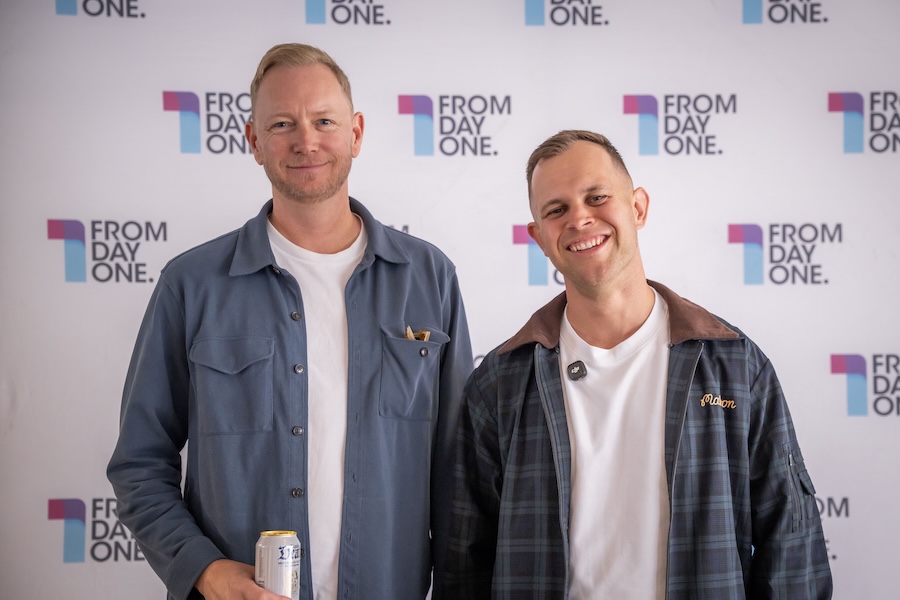
Murphy shared his playbook during a fireside chat at From Day One’s LA marketing conference about making ads worth sharing. Moderator Benjamin Diedering, founder and CEO of BDX media, interviewed Murphy, uncovering how a brand built on earned media has reached more than 50 billion impressions so far this year.
Attention Can’t Be Bought
Murphy gave credit to his team and to the company’s founder Mike Cessario, whom Murphy called its de facto CMO. He also emphasized the problem with traditional advertising: “We’re in a world where it is really impossible to buy attention.” Digital ads get skipped, and a commercial break has people turning to their phones.
His solution is to put marketing in entertainment. Liquid Death chose the comedy route, but he pointed out that brands could go another way, such as education or earnest storytelling. The goal is to beat “everybody else on the internet, not your fellow marketers.”
Murphy tracks shares rather than views. “Our best stuff equals or exceeds one share to every like,” he said. Bots don’t share, so shares are the proof that real people are engaging.
Rethinking Risk
Diedering asked how this could possibly be done without a founder who is risk tolerant. Murphy says that marketers misjudge risk. Legal and PR teams focus on avoiding litigation and controversy, but they don’t recognize the cost of spending a large media budget on work that turns out to be forgettable. “It’s carbon monoxide in the basement,” said Murphy.
Murphy came from a career at the biggest agencies and brands. Marketers often lose touch with what they actually like to do outside of work, he says. “You are a regular human being that’s listening to true crime podcasts and watching Game of Thrones,” he said. “Then you step through those doors, and now all of a sudden there’s pearl clutching.”
Riding Cultural Currents
Murphy says Liquid Death built its early awareness on free, earned media and produces everything in house. Each production averages about $150,000.
The brand is also leaning on shifts that are already happening: the concern around plastic waste, the increasing focus on health, Gen Z’s move away from alcohol, and the loneliness epidemic. At a social gathering, a Liquid Death in hand sparks a conversation and reads much differently than a plastic water bottle.
When Diedering asked whether Liquid Death is a water company or a media company that happens to sell water, Murphy responded, “We’re an entertainment company that monetizes via beverage.”
Murphy said the brand’s best ideas borrow advertising tropes, such as satirical pharma or beer commercials, and then follow through. “We love doing a thing that seems like it’s ridiculous, but making it real,” he said. A lot of brands joke about outlandish ideas on April Fools’ Day, but Liquid Death will actually do it, and that’s what gets the press and shares.
For example, the team found people online who called its water the worst they’d ever tasted and flew them out to Los Angeles for a blind tasting. Anyone who picked Liquid Death as the worst would win $1,000, and anyone who didn’t got tased. The company also turned verbatim hater comments into songs across heavy metal, punk, and power pop, and released them as an album.
Small Teams, Big Ideas
Larger companies can’t copy a startup’s speed overnight. But they can start by investing in creative talent as they would in finance or operations, says Murphy. Liquid Death’s creatives wrote for The Onion and Adult Swim and work as stand-up comedians. “The idea is your point of leverage,” he said.
Liquid Death rejects checklists and brand books, says Murphy. A small team works under a single vision that Cessario filters. Too many cooks, he said, produce mediocre work.
Murphy closed by inviting unexpected brands to collaborate. He compared the model to “Saturday Night Live,” where Liquid Death writes for a serious brand or politician and brings them onstage.
The blood-red skateboards and the taser test can look like shock tactics, but Murphy described them as answers to one question: Would a regular person care enough to send this to a friend? For brands with smaller budgets and more cautious legal teams, Murphy’s advice boils down to this: hire great creatives, keep the group small, and make the ridiculous idea real.
Grace Turney is a St. Louis-based writer, editor, artist, and former journalist and librarian. She holds a Master of Library & Information Science (MLIS) and has nearly a decade of experience writing both full time and as a freelancer. See more of her work at graceturney17.wixsite.com/mysite.
(Photos by Josh Larson for From Day One)