Building Stronger Partnerships With the Businesses That Power America
BY Ade Akin
|
November 23, 2026

Rachel Castro recently asked two small business owners near her home how their customers found them. Both had struggled with SEO for years with little to show for it. Then customers started arriving through AI tools. “We couldn’t figure out Google,” the owners told her.
For Castro, SVP of business banking partnerships and channel growth at U.S. Bank, those conversations show how quickly AI adoption is spreading among small-business owners. About 75% of small business owners now use generative AI, according to the bank’s 2026 Small Business Perspective survey. Her bank is using the same technology to keep a habit most lenders dropped years ago: assigning a human banker to even its smallest clients.
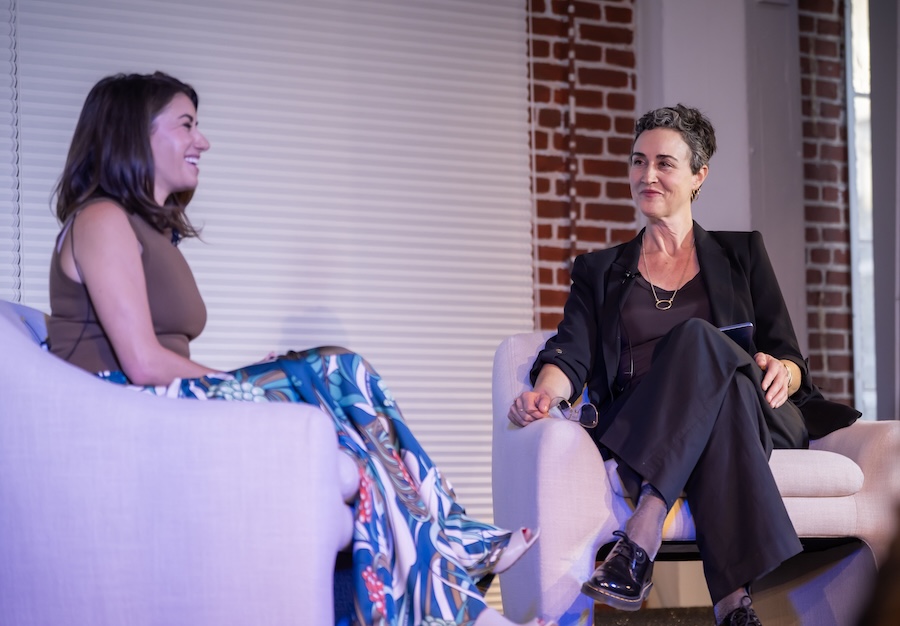
Castro shared that banking strategy with journalist Joellen Perry during the closing fireside chat at From Day One’s Los Angeles marketing conference. Their conversation covered what the bank’s research reveals about younger founders, how a traditional lender competes in digital banking, and why AI makes fraud harder to catch.
Castro leads partnerships for business banking at U.S. Bank, serving companies with up to $50 million in annual revenue. Her team manages the bank’s fintech partnerships, channel revenue growth, and small business strategy. She helped large corporations build startups at Boston Consulting Group before joining the bank.
“My favorite part is there are a lot of people who are excited to rally behind a lot of ideas, and I have lots of ideas, and so we can create a really large impact,” Castro said.
Gen Z Owners Are Betting Big
U.S. Bank has run its small business survey for four years, polling owners who bank elsewhere as well as its own customers. This year’s edition reached 1,000 small business owners, plus an extra 200 Gen Z owners added to get a clearer read on that group.
Castro says that the bank wanted a closer look at younger founders as baby boomers retire and hand off their companies. “You see this mass transfer of small businesses to Gen Zers,” she said.
About 90% of owners cite the economic environment as a pressure on their business, the 2026 survey found. Castro adds that the bank fielded its questions just as tariffs began driving up the cost of goods.
“What pleasantly surprised us is the optimism of small business owners,” she said. That economic optimism shows up in the data. About 91% of owners plan at least one growth move in the next year, and 60% plan to hire, according to the survey.
Gen Z owners are pushing hardest. About 24% say they will pursue bold growth opportunities, compared to 13% of Gen X and baby boomer owners. Many are putting their personal lives on hold to do it: 30% are delaying buying a home, 25% are delaying having children, and 21% are delaying marriage.
“They’re going all in, they’re trying to make big bets, they’re investing in AI and in tools to increase productivity,” she said.
Marketing to Boomers and Gen Z
Reaching younger founders encouraged the bank to rethink how it markets itself. “We as a bank have historically had an older demographic,” Castro said.
This year, U.S. Bank turned to celebrity endorsements for the first time, she says. Actress and entrepreneur Jessica Alba became the face of the bank’s new small business credit cards. Castro says the bank chose a founder who built a small business before a big exit, with an eye on “who we want to serve in the future.” U.S. Bank also signed on as the official bank and wealth management sponsor of the NFL.
Competing with app-only rivals takes more than advertising. Castro believes a bank must build technology before its customers ask for it. U.S. Bank, she says, discussed tokenized deposits and crypto with regulators long before stablecoins became a hot topic. “Although we are a more traditional bank, part of why I joined was that we are quite innovative,” Castro said.
AI Frees Bankers for Clients
Inside the bank, AI delivers clear productivity gains. Castro says engineers now release about 30% more code through automated deployments. The bank then puts those savings toward customers.
Chasing paperwork is a simple example. When a borrower forgets to upload a document, a specialist banker usually has to call, find a good time, and walk the owner through the upload. U.S. Bank is now looking for partners to hand that job to AI agents.
Owners themselves are building AI workflows into daily operations too. At the bank, though, the time AI saves goes toward people. U.S. Bank assigns a banker even to clients earning less than $2.5 million a year, which Castro calls a deliberate choice.
“When we think about the core of what banking is, it’s trust. It’s pattern recognition,” she said. That customer trust matters because most owners are experts in their trade, not in finance.
Castro points out that owners of micro businesses often know little about accounts receivable, accounts payable, invoicing, or cash flow. “In order for us to make it work as a business, we need to leverage AI more,” she added.
Fraud Prevention in the AI Era
The same tools that make bankers faster also help criminals. For years, banks treated a polished website as a sign that a business was legitimate, since building one cost money. That signal no longer holds.
“It’s really easy to spin up a website really quickly. It’s really easy to impersonate an existing business,” Castro warned.
Fraud prevention now demands a higher bar. Castro says banks are exploring consortiums to share data, because “usually a small business defrauds one bank, they’re going to defraud many banks.” Lenders also face a newer question: “know your agent.” Card networks and banks are debating whether an AI agent should be able to move money for a customer or get read-only access.
Support Your Favorite Small Business
Castro closed on a hopeful note. One of her groups serves underserved small business owners, and she has seen a small bridge loan or a little-known government program carry a company from one payroll to the next. She says owners who survive their first two years usually master cash flow, payroll, and seasonal swings.
“Just think about your favorite small business, and I’d encourage you to go and support them today and tomorrow,” she said.
Ade Akin covers artificial intelligence, workplace wellness, HR trends, and digital health solutions.
(Photos by Josh Larson for From Day One)

