Beyond AI Literacy: Three Ways People Teams Can Lead AI Transformations
BY Carrie Snider
|
April 22, 2026

Leaders know they need to adopt AI. But how to actually make that shift can be unclear.
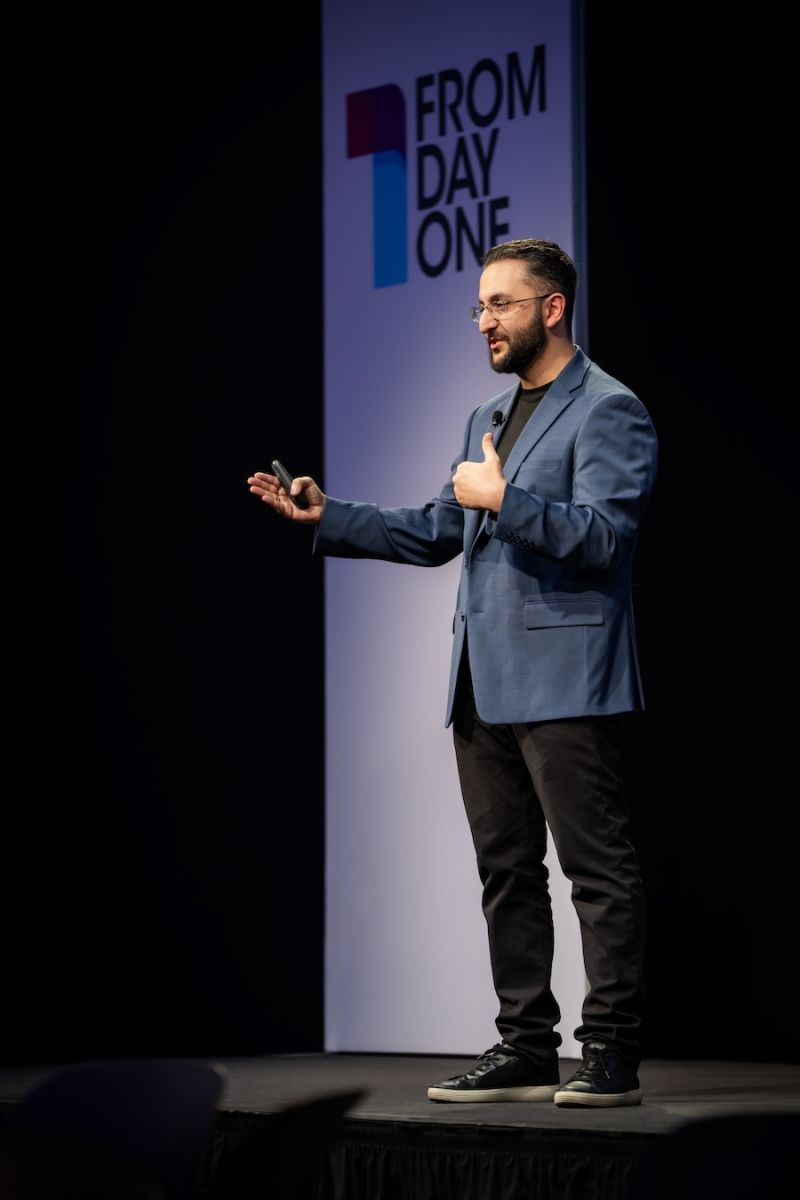
At From Day One's Silicon Valley event, Tigran Sloyan, CEO and co-founder of CodeSignal, outlined how organizations can move beyond basic awareness to true AI fluency.
His core point: AI isn’t just another tool. It’s a technology transformation, which is something every company has faced before.“Every time we’ve created new technology, we have to teach humans how to use that technology, and that essentially became a job,” he said.
History backs this up. The printing press technology reshaped work. The same happened with typewriters and computers. Tasks evolved, and people learned new ways of working. AI is simply the next chapter. “The next phase of AI will do the same thing for the jobs today, where many of the jobs today become tasks of tomorrow.”
For people teams, that raises a pressing question: how do you prepare a workforce for something that’s changing this fast?
The Role of People Teams
HR and people leaders are at the center of this shift, whether they feel ready or not. According to Sloyan, their role comes down to two priorities: First, define how AI applies to their specific organization. Second, use AI to improve workflows, making work better, faster, and more efficient
The challenge is speed. AI adoption is happening quickly and unevenly across organizations.
“Doing both of these things is incredibly difficult,” Sloyan said, “because the timeline is highly compressed.” Structure matters. His framework breaks the process into three steps: assess, develop, and deploy. Here’s the three steps to lead AI transformations.
Step One: Assess Skills
Before you can train people, you need to understand where they stand.
Sloyan compared AI assessment to learning how to drive. A written test might confirm basic knowledge, but it doesn’t prove someone can actually operate a car. “Imagine how much worse the streets would be,” he said. To get a license, a person must actually get behind the wheel and show the instructor their skills.
The same applies to AI. Multiple-choice quizzes can measure familiarity, but they don’t capture real capability. Instead, organizations need practical, hands-on evaluation.
“At its core, assessing skills starts from: Can you simulate it?”
For example, instead of asking recruiters what they know about AI, place them in realistic scenarios: Gathering job requirements, sourcing candidates, closing hires. Then observe how they actually use AI in those moments.
The same approach works across functions. Sales teams can practice negotiations. Customer service teams can handle simulated interactions. The goal is simple: see in-the-moment performance, not just knowledge. Because across any workforce, AI ability varies widely, even in companies pushing adoption aggressively. Without proper assessment, you’re guessing.
Step Two: Develop AI Literacy at Scale
Once you know where people are, the next step is helping them improve at scale. Many organizations struggle because employees aren’t starting from the same place, and they don’t learn at the same pace.
“Instead of assuming that everybody is going to be learning at the same pace, you have to continuously measure,” Sloyan said.
Hands-on learning becomes critical. Simulations allow employees to practice real tasks while building confidence and skill. More importantly, they create measurable progress.
AI literacy isn’t one-size-fits-all. What it means for a recruiter differs from what it means for an engineer or a salesperson. It depends on the role, the company, and the context. That’s why ongoing measurement matters. It ensures no one falls behind—and highlights where additional support is needed.
Step Three: Deploy AI Across the Talent Lifecycle
The final step is continual learning. AI skills are always changing. As technology evolves, so must the workforce. That means embedding learning into the entire employee lifecycle, not treating it as a one-time initiative. Assessment feeds development. Development feeds application. And the cycle repeats.
At CodeSignal, this process is supported by an AI assistant named Cosmo the corgi, which guides employees through assessments and hands-on learning. While the tool itself may vary by organization, the principle is what matters: make learning continuous, interactive, and adaptable. Because even once employees reach proficiency, the target keeps moving.
Ultimately, says Sloyan, AI reshapes how people work. Organizations that succeed won’t be the ones that simply adopt AI tools, but the ones that invest in helping their people adapt alongside them. That starts with understanding skills, building them intentionally, and reinforcing them over time. Technology transformations have always required humans to evolve. AI is no different. The difference now is speed and the opportunity for people teams to lead the way.
Editor’s note: From Day One thanks our partner, CodeSignal, for sponsoring this thought leadership spotlight.
Carrie Snider is a Phoenix-based journalist and marketing copywriter.
(Photos by Josh Larson for From Day One)