Delivering Large-Scale Frontline Workforce Development
BY Grace Turney
|
May 15, 2026

From the vast warehouse to the loud machinery, the first day inside a Humana pharmacy dispensing site can be jarring. Workers who walk in expecting something quieter and more clinical may feel shocked. “You don’t want the first time they see the inside of a dispensing site to be the first day on the job,” said Laura Bartus, head of learning at CenterWell Pharmacy, a division of Humana. That moment of surprise, she says, is a fully preventable failure of recruitment.
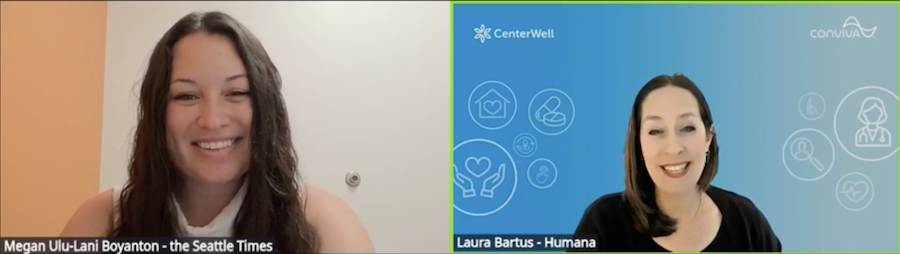
Bartus joined moderator Megan Ulu-Lani Boyanton, a business reporter for the Seattle Times, for a fireside chat closing out From Day One’s May virtual conference. The conversation covered how learning and development (L&D) can drive both recruitment and retention, what it takes to earn organizational buy-in for training programs, and how large companies like Humana can preserve human connection across sprawling teams.
Closing the Preview Gap
“Job shock is real,” Bartus said, describing the moment new hires realize a role is harder or different than advertised. Her solution is straightforward: show candidates what the job actually looks like before they accept it. Humana’s pharmacy team now offers virtual tours of dispensing sites during the interview process, walking candidates through the physical environment, daily workflows, and the path a prescription takes through the system. Clinic teams are building similar previews for front-office staff.
The goal isn’t to screen people out; it’s to let them opt in with full information. “I want them to realize that when they’re interviewing,” she said. Candidates who self-select based on an honest picture are more likely to stay.
Retention, Bartus noted, is just as much about trajectory as transparency. Pay matters, and frontline workers are rarely compensated generously. But so does the sense that a current role leads somewhere. Replacing an employee can cost an organization $10,000 to $15,000 when recruiter time, posting fees, and leadership hours are factored in. The math makes career pathing a business imperative, not just a cultural nicety.
“Where you want to go is not divorced from where you are now,” she said. A call center agent, for example, is developing empathy, active listening, negotiation, and de-escalation skills daily. Those translate directly to sales, team leadership, and beyond. Bartus’s job, as she sees it, is to help employees see those connections and build a bridge.
Winning Stakeholder Buy-In
Even the best-designed learning initiative can fail without the right support. Bartus is direct about what separates programs that succeed from those that quietly disappear: senior leader investment. Not passive approval, but active championship.
“If the senior leader over that area isn’t personally invested and doesn’t own it, that program is always going to fail,” she said. Her approach when launching something new is to secure that alignment before building momentum. She seeks a seat at executive leadership meetings, shares what’s being proposed and why, and makes the value explicit. “If you don’t show them the value of what you’re building, they’re not going to buy in.”
She frames L&D not as a service function waiting to be funded, but as a strategic partner that earns credibility by speaking the language of outcomes. Learning leaders who want organizational support, she said, have to go get it proactively and in person.
Building a Team That Talks to Itself
Bartus leads a team of 67, and collaboration across that group doesn’t happen by accident. A few years ago, facilitation, design, operations, and product functions operated largely in isolation. The resulting training was fine, but it reflected the siloed thinking that produced it.
Her fix was structural: a pod model that pulls people from different roles into biweekly working groups organized around a specific learning audience. Designers, facilitators, education leads, operations partners, and product partners now share a room and a common goal. The training they build together is more coherent because everyone is solving for the same end user.
The social byproducts matter too. “They develop their own in-jokes and their own subculture,” Bartus said. “They champion each other and they cheer each other on.” At all-team meetings, the clinic side of her organization dedicates time to kudos—peers publicly recognizing each other’s contributions in front of the full group. In an environment where raises aren’t always possible and bonuses depend on the fiscal year, recognition becomes its own form of compensation.
“We can always recognize the people around us for doing great work,” she said. “We can make them feel appreciated, and we can show them: your work is important to our success.”
Cross-Training as a Competitive Skill
The same flexibility Bartus builds into her team culture applies to her staffing model. When facilitation demand drops and design work spikes, she doesn’t wait. Facilitators on her team have been cross-trained as designers, allowing her to redirect capacity without disruption.
That model showed its value when Humana’s contracts with telehealth providers expanded GLP-1 offerings and the volume of related patient calls increased. Operations staff stepped up to handle the new call load, learning what the medications are, how coverage rules work, and what patients need to know. “People have been really wonderful about flexing new skills,” Bartus said. She credits strong frontline leadership for creating an environment where employees raise their hands for new challenges rather than waiting to be assigned.
The throughline connecting all of it, recruitment honesty, stakeholder alignment, team cohesion, adaptive staffing, is permission. Permission to fail in training before the stakes are real, to grow in a direction that wasn’t on the original job description, and to be seen, recognized, and valued for work that often goes unnoticed. “We need to give them practice,” Bartus said, “and we need to give them space to fail while they’re with us.”
Grace Turney is a St. Louis-based writer, artist, and former librarian. See more of her work at graceturney17.wixsite.com/mysite.
(Photo by nortonrsx/iStock)